The International Court of Justice (ICJ) delivered its final judgment on November 19, 2026, ruling that Myanmar committed genocide against the Rohingya Muslim minority during military operations in northern Rakhine State in 2017. The court ordered Myanmar to provide compensation to the victims. This decision marks a historic precedent as it is the first time the ICJ has determined that a state actively committed the crime of genocide, distinguishing it from previous rulings where states were found only to have failed in their duty to prevent such acts.
Historical Context and Persecution
The Rohingya are a Muslim ethnic minority historically residing in Rakhine State, near the Bangladesh border. Despite generations of residence, Myanmar authorities have long refused to recognize them as a national ethnic group, often labeling them illegal immigrants from Bangladesh. A pivotal moment occurred in 1982 when Myanmar enacted a citizenship law that stripped most Rohingyas of their nationality, rendering them effectively stateless. This legal exclusion facilitated decades of systemic discrimination, including restrictions on movement, access to education and healthcare, marriage limitations, land confiscation, and targeted violence by security forces.
The 2017 Military Operations
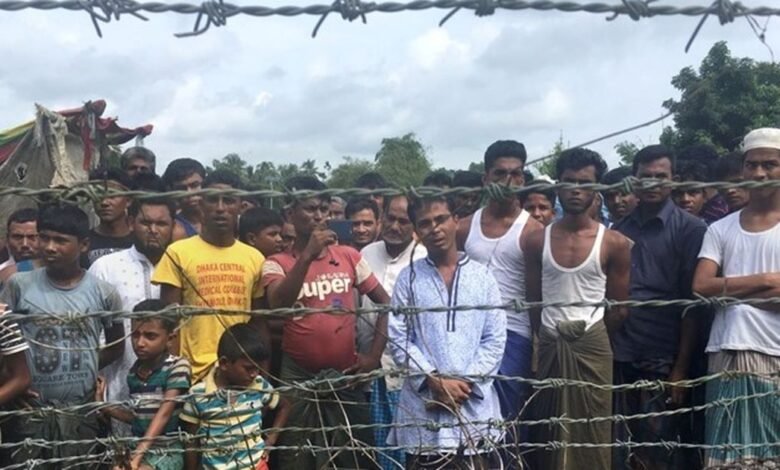
In August 2017, the Myanmar military launched a wide-scale operation described as “cleansing operations,” which resulted in severe attacks on civilian populations. United Nations teams and human rights organizations documented widespread crimes, including mass killings of men, women, and children, sexual violence, and the burning of hundreds of villages. These actions destroyed livelihoods and prevented return. Estimates indicate that over 24,000 people were killed between 2017 and 2018. The ICJ judgment specifically cited evidence proving the violent killing of approximately 10,000 Rohingya individuals during the 2017 operations alone. More than 1.3 million Rohingya remain displaced, with data from the UN High Commissioner for Refugees highlighting the scale of the crisis.
Gambia’s Legal Challenge
The case was brought before the ICJ not by neighboring Bangladesh, but by Gambia, a West African nation. In November 2019, Gambia filed a formal complaint accusing Myanmar of violating the Convention on the Prevention and Punishment of the Crime of Genocide. Under Article IX of the Convention, disputes regarding its interpretation or application can be referred to the ICJ. Gambia argued that as a party to the convention, it had the right to hold Myanmar accountable. In July 2022, the court rejected Myanmar’s initial objections, affirming Gambia’s legal standing and the court’s jurisdiction, establishing that a state does not need to prove direct harm to itself to demand compliance with genocide prevention obligations.
Judicial Timeline and Final Ruling
The legal proceedings spanned several key phases. After Gambia’s filing in November 2019, hearings on provisional measures were held in December 2019, where then-State Counsellor Aung San Suu Kyi defended the military actions as responses to armed attacks. In January 2020, the court unanimously ordered Myanmar to take all measures within its power to prevent genocide. By 2025, the case included interventions from 11 other states, including Canada, France, Germany, the UK, and others. The final judgment on November 19, 2026, concluded that Myanmar committed genocide through killings, sexual violence, attacks on fleeing civilians, and village destruction. The court mandated investigations into suspected perpetrators and compensation for victims.