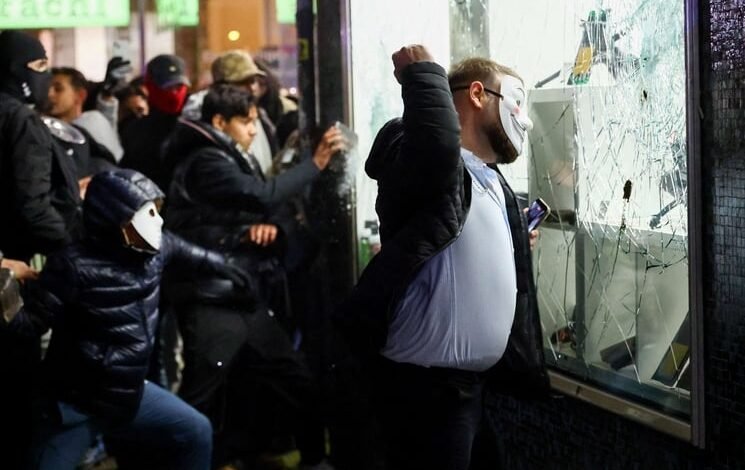
German youth protests entered a critical phase on Monday as authorities in the state of Hesse signaled the potential cancellation of scheduled demonstrations on November 20. This move follows violent riots that erupted in Frankfurt late last week, prompting a broader debate on public order and freedom of assembly.
Simultaneously, deep divisions have surfaced within the federal coalition regarding the attribution of responsibility for the unrest. While some officials implicated groups with migrant backgrounds, preliminary police investigations indicate that the majority of those detained hold German citizenship. Security estimates further suggest that certain individuals involved in looting lacked clear political motivations tied to the protests.
Hessian Interior Minister Roman Boesik raised the prospect of prohibiting future gatherings, questioning whether the planned November 20 events could be organized safely given the previous violence. He accused organizers of failing to maintain control, arguing that the attacks on police and property necessitate a reevaluation of security protocols. Although acknowledging the constitutional right to peaceful assembly, Boesik emphasized that safety is a prerequisite for such rights. Legal experts note that banning protests requires specific risk assessments under Article 8 of the Basic Law, rather than reacting solely to past incidents.
The controversy was compounded by the appearance of a black flag featuring a smiling skull wearing a straw hat during the Frankfurt demonstrations. According to Der Spiegel, the symbol is inspired by the anime series “One Piece,” which has evolved from pirate adventures to themes of fighting corruption and defending freedom. The flag has appeared in protests across Nepal, Indonesia, the Philippines, and France, reflecting a shift among younger generations toward digital and pop-culture symbols over traditional party slogans.
A significant rift opened between Federal Interior Minister Alexander Dobrindt and Defense Minister Boris Pistorius. Dobrindt attributed the violence to left-wing elements and individuals from “migrant circles” exploiting peaceful protests. Pistorius challenged this characterization, stating he lacked sufficient evidence to confirm these groups as the primary drivers of violence. He questioned the utility of labeling participants by origin, particularly when many are multi-generational residents, though he maintained that all perpetrators must face justice regardless of background.
Family Minister Karen Blumenthal added to the discourse, calling for an examination of integration issues and the root causes driving some groups toward violence. She urged listening to the legitimate social and educational demands of young people while condemning criminal acts. Police Commander Stefan Mueller clarified that violence occurred in distinct phases: a limited group attacked near the protest’s end, while subsequent looting in the main shopping street was carried out by different, previously known entities. These developments place the German government under intense scrutiny as it balances security concerns with civil liberties ahead of international youth strike actions.