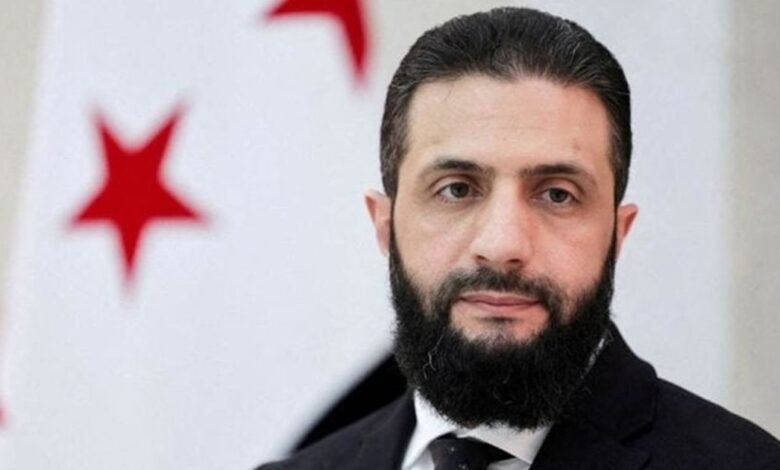
In his strategic outlook for Syria’s future, President Ahmed al-Sharaa has presented a unified framework where economic revitalization, security stability, foreign policy realignment, and state-building are inextricably linked. This holistic approach aligns with international expectations for a singular Syrian state characterized by a unified military, centralized institutions, and declared rights for various community components. The envisioned trajectory includes renewed diplomatic engagement with Washington, a negotiated path with Israel, regional integration, and an open economic geography.
Al-Sharaa’s conceptualization of the Syrian state bears a striking resemblance to the political structures found in Jordan and other Gulf monarchies, diverging sharply from the Turkish model. The objective appears to be the establishment of a regime devoid of overt arbitrariness or repression, featuring civil and political liberalism that remains unanchored within robust independent institutions, political parties, or a vibrant civil society. While the plan promises improved living standards and the inclusion of minority components in administrative roles, it simultaneously seeks to maintain the core of executive power exclusively within the hands of Sunni elites.
This vision intersects with international interests, which prioritize stability and economic security over genuine democratic transition. The international community views good governance primarily through the lens of its own regional and economic stakes, accepting limited inclusivity without demanding a true civic state or multi-party democracy. Al-Sharaa articulated this stance before the Atlantic Council, emphasizing that reconstruction and institutional reform must proceed alongside reintegration into the regional fold.
Addressing domestic concerns, al-Sharaa stated he does not wish to build the political system on ethnic, religious, or geographic quotas, arguing that such power-sharing could lead to national fragmentation. He insisted that authority must be institutional rather than personal. However, critics argue this rhetoric lacks substantive political value, noting that the previous Assad regime similarly projected an image of transcending sectarian divides while concentrating absolute power in the presidency. The current administration’s inclusion of certain societal components is viewed as superficial participation under the overarching control of the president, rather than a genuine dismantling of sectarian patronage.
The proposed five-year transitional period raises questions regarding the time required to establish national parties and conduct genuine presidential and parliamentary elections. Furthermore, the characterization of the People’s Assembly formation process as “imperfect” highlights significant political crises. The assembly was selected from above without public consultation, comprising members who lack the theoretical or practical qualifications for their positions. Ultimately, applying models suitable for culturally homogeneous societies like Jordan to Syria’s diverse landscape risks reproducing authoritarian rule, albeit with softer methods, unless accompanied by true democracy and citizenship that erodes narrow identities.