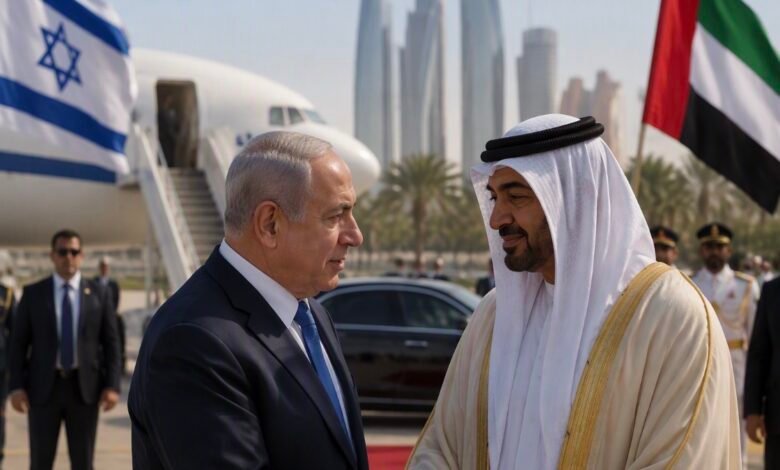
An Israeli report published in Maariv newspaper has revealed significant details surrounding Prime Minister Benjamin Netanyahu’s recent visit to the United Arab Emirates. The article indicates that the trip was not straightforward but was instead preceded by weeks of intense diplomatic communications and pressure from the Israeli side. According to sources familiar with the behind-the-scenes negotiations, both nations had completed necessary security and logistical arrangements for a secret visit just days before it was scheduled to take place. The plan was to announce the meeting only after its conclusion.
However, the situation changed abruptly at the final stage. The UAE side informed the Israeli delegation that the flight would be canceled shortly before the departure time. One source cited by the newspaper stated that all preparations were fully complete and the delegation was ready to leave when they received the sudden notice of cancellation. The UAE justified this decision by claiming that President Sheikh Mohamed bin Zayed Al Nahyan was not present in the country during that period. Yet, other data mentioned in the report suggested that the Emirati president was actually in Abu Dhabi at the time, adding a layer of ambiguity to the reasons for canceling the first attempt.
The report highlights that Netanyahu exerted heavy pressure to finalize the visit before upcoming Israeli elections. His efforts included direct contacts with UAE leadership and assistance from close associates and international intermediaries. These communications also involved messages regarding potential expansion of security cooperation between Israel and the UAE in the near future, an attempt to persuade Abu Dhabi to agree to the meeting. The newspaper linked these developments to previously reported phone calls attributed to Mohamed bin Zayed with Netanyahu before the October 7 attacks, where the Emirati president allegedly warned of possible serious developments in Gaza.
Some UAE positions and messages during this period may have been aimed at containing the fallout from the canceled first visit and maintaining a certain level of political communication between the two sides. The personal and political relationship between Netanyahu and Mohamed bin Zayed has experienced periods of tension in recent years, despite official relations established after normalization agreements. The UAE leadership appears keen on avoiding the appearance of influencing Israeli elections or granting Netanyahu domestic political gains during his campaign.
Despite these complications, communications continued until Netanyahu successfully visited Abu Dhabi on Sunday evening, meeting with Mohamed bin Zayed in a session whose details were not widely disclosed. Notably, the UAE side has not issued a detailed official statement about the visit, nor did it receive prominent coverage in major UAE media outlets. This silence is considered notable given the political level of the meeting. The report concludes by raising questions about the circumstances of announcing the visit and whether it was coordinated fully with Abu Dhabi or if Israel revealed details against UAE wishes. The true nature of messages exchanged and the real reasons behind the initial cancellation remain unclear amid the absence of official UAE clarifications.