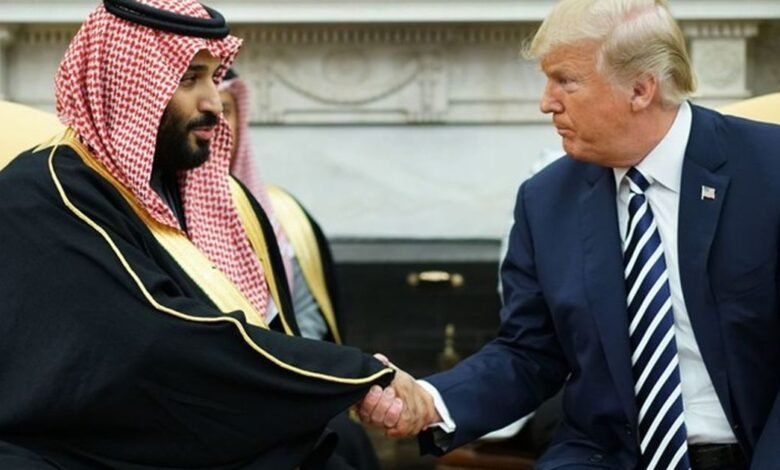
Classified documents presented to the United States Congress have triggered significant alarm among American lawmakers regarding the potential for Saudi Arabia to develop nuclear weapons capabilities. According to an assessment detailed by the Israeli newspaper Ma’ariv, the intelligence evaluation suggests that Riyadh has not excluded the possibility of pursuing a nuclear arms program. This revelation comes amidst growing scrutiny of the nuclear agreement brokered by President Donald Trump, which aims to assist Saudi Arabia in establishing a civilian nuclear energy sector.
The primary concern driving this anxiety is the provision within the deal that could eventually allow Saudi companies to enrich uranium up to 20 percent. While initial restrictions limit enrichment to below five percent, subsequent studies could pave the way for higher levels. Experts note that 20 percent enriched uranium can be rapidly converted to weapons-grade material, raising fears of a regional arms race. Democratic legislators argue that this pathway contradicts the administration’s previous strict stance on non-proliferation, particularly its criticism of the 2015 Iran nuclear deal.
A group of Democratic senators, led by Ed Markey and Jeff Merkley, sent a letter to Secretary of State Marco Rubio, accusing the administration of bypassing established norms and adopting overly lenient constraints in response to Saudi demands. Senator Merkley argued that the United States should not place trust in Saudi statements regarding such sensitive matters, pointing to Riyadh’s request for nuclear fuel production as evidence of intentions beyond purely civilian goals. Despite these concerns, the US State Department maintains confidence in the guarantees embedded in the agreement and explicitly stated it does not support a nuclear weapons program in Saudi Arabia.
Further complicating the oversight landscape, critics highlight that the agreement does not require Saudi Arabia to join the International Atomic Energy Agency’s Additional Protocol, thereby making monitoring more difficult. The political fallout is exacerbated by allegations from Democrats that individuals close to the President, including Jared Kushner, and companies linked to Commerce Secretary Howard Lutnick, stand to benefit personally from the deal.
The agreement is currently subject to a 90-day congressional review period, during which lawmakers can pass legislation to block the deal if sufficient support is gathered. However, the most significant obstacle may lie in President Trump’s insistence that Saudi Arabia normalize relations with Israel as a condition for finalizing the nuclear pact. Given Israel’s refusal to establish a Palestinian state, Riyadh is expected to reject this precondition, potentially stalling the entire arrangement.