Systemic Control and Human Cost
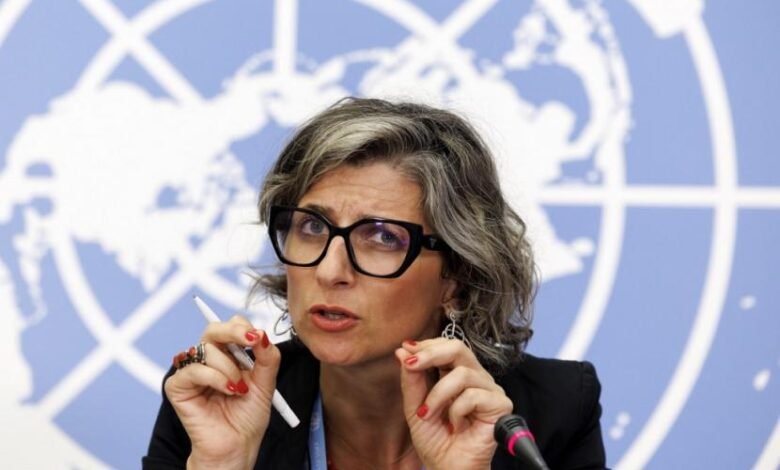
Francesca Albanese, the UN Special Rapporteur on the situation of human rights in the Palestinian territories occupied since 1967, has issued a stark warning regarding the militarization of movement in the West Bank. She stated that the checkpoints, road gates, and other restrictions imposed by Israeli occupation forces are actively fragmenting Palestinian land. This infrastructure enforces a system of arbitrary control that exacts a heavy toll on Palestinians, consuming their time, destroying livelihoods, limiting educational opportunities, and, in severe cases, claiming lives.
Albanese emphasized that the psychological and physical burden of this system transforms routine existence into a form of suffering. “Arbitrariness itself becomes a form of torture when every journey, every appointment, and every family visit depends on whether a gate is open or if a soldier permits passage,” she said. The rapporteur argued that statistical figures alone cannot capture the magnitude of the hardship caused by these restrictions. Instead, the system steals hours and days from people’s lives, separates families, denies students access to education, deprives workers of income, and obstructs access to life-saving healthcare.
A Tragic Example
To illustrate the lethal consequences of these barriers, Albanese highlighted the case of Ahmed Zaid, a four-month-old infant who died last July. According to the report, Israeli soldiers prevented Ahmed’s family from reaching an ambulance waiting behind a military checkpoint for more than an hour. Albanese described this death as a tragic example of what the system means from a humanitarian perspective. For millions of Palestinians, reaching workplaces, schools, universities, hospitals, or family members can take hours. Routes may be changed without prior notice, or access may become completely impossible.
Data and Verification
The scale of this restriction has reached unprecedented levels. Data documented by the Office for the Coordination of Humanitarian Affairs (OCHA) in December 2025 recorded 925 checkpoints and other obstacles restricting the movement of approximately 3.4 million Palestinians across the West Bank, including Jerusalem. This figure represents the highest number recorded in twenty years, exceeding the average of the preceding two decades by 43 percent.
Recent investigations reviewed by the Special Rapporteur confirm that this suffocating system has intensified significantly. These findings are based on field reports, surveys involving hundreds of Palestinians, satellite imagery, and billions of data points derived from Global Positioning System (GPS) networks. The convergence of these diverse data sources underscores the severity and expansion of the mobility constraints currently facing the Palestinian population.