Widespread Structural Damage in Northern Camps
The housing landscape in the West Bank is undergoing significant shifts due to military operations and demolitions. Data from the Palestinian Central Bureau of Statistics indicates that damage to infrastructure in Jenin, Nour Shams, and Tulkarm has fundamentally altered living arrangements for residents. By February 2026, 680 buildings in Jenin camp were damaged, representing approximately 53% of the total structures. In Nour Shams camp, 434 buildings were affected, accounting for nearly 55% of the camp’s inventory. Tulkarm camp saw 407 damaged buildings, which constitutes about 37% of its total.
Rise in Overcrowding and Alternative Housing
These physical damages have directly impacted family living conditions. The data shows that 3.4% of households across the West Bank now live in high-density accommodations, defined as three or more individuals per room. This figure rises significantly within refugee camps, reaching 8.9% in 2025. There is also a marked shift in the types of shelters families are forced to occupy. In 2025, 20.1% of families in camps resided in housing classified as “other,” compared to just 1.4% in rural areas and 0.3% in urban zones. Across the West Bank, the proportion of families living in apartments increased from 60.4% in 2024 to 68.6% in 2025, while those in “other” categories rose from 0.4% to 1.6%. These changes are most pronounced in Jenin and Tulkarm provinces.
Demolitions and Settlement Violence
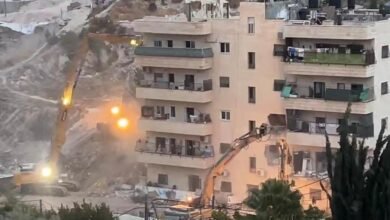
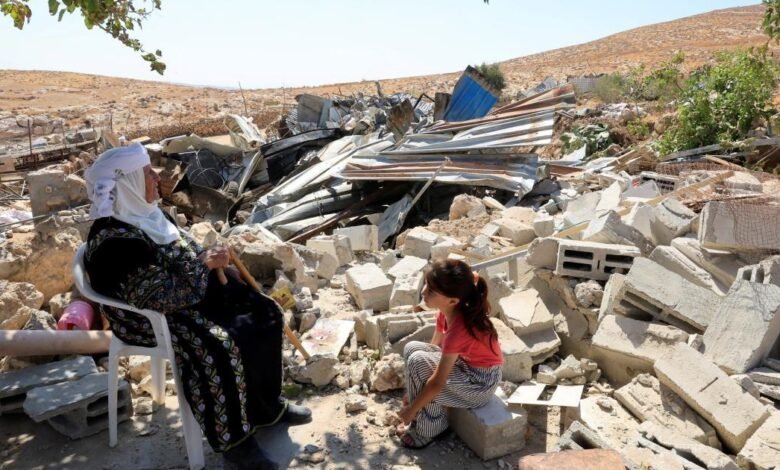
Housing instability is compounded by ongoing demolition campaigns and settlement aggression. According to the Wall and Settlement Resistance Authority, Israeli authorities carried out 341 demolition operations in the first half of 2026, destroying 740 Palestinian structures. Additionally, 254 demolition orders were issued on grounds of lacking permits, primarily targeting Hebron, Bethlehem, and Jerusalem. During the same period, 3,488 settlement attacks were recorded against Palestinian communities, properties, and livelihoods, contributing to the displacement of thousands.
Limited Construction Amidst Crisis
Official statistics highlight a disconnect between construction activity and housing needs. In the second quarter of 2026, only 1,814 building permits were issued nationwide, including 1,199 for new structures. This resulted in 4,105 authorized housing units, with 3,554 being newly constructed. No building permits were issued in Gaza during this timeframe. The crisis is characterized not merely by a shortage of units, but by the systematic destruction of existing homes and communities, severely undermining the ability of Palestinians to maintain stable residences, especially in heavily damaged camps.