Significant Aviation Losses Recorded
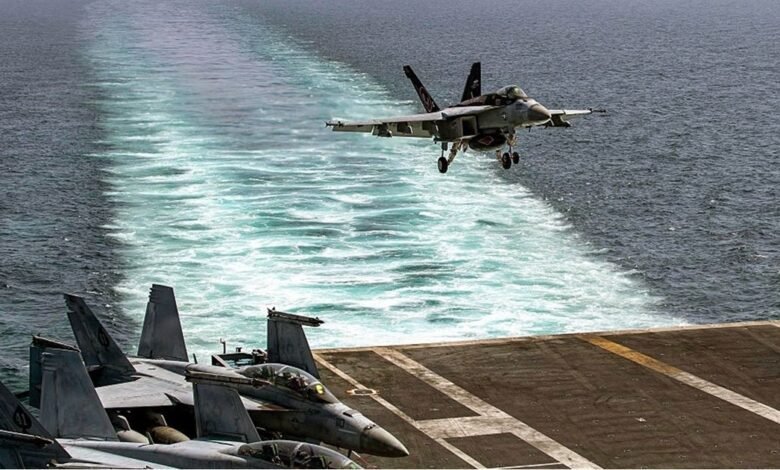
A report issued by the Congressional Research Service has disclosed that the United States military suffered the loss of 81 aircraft, helicopters, and unmanned aerial vehicles, ranging from destroyed to damaged units, during the war with Iran. The assessment places the cost of replacing these assets at approximately $3.3 billion. The losses encompassed a variety of military aviation assets, with the MQ-9 Reaper drones sustaining the heaviest damage. These drones, utilized for intelligence, surveillance, reconnaissance, close air support, and combat search and rescue missions, accounted for more than half of the total recorded losses.
The inventory of damaged or lost equipment included prominent US military platforms such as an F-35A fighter jet and an E-3 Sentry. The E-3 is a four-engine jet equipped with a large radar dome above its fuselage, designed for tracking targets and managing airspace. The report’s financial estimates regarding the missing aircraft rely on figures from the Congressional Budget Office. It notes that the replacement cost ranges from $1.9 billion to $3.3 billion, depending on the Department of Defense’s plans to compensate for losses and rebuild damaged capabilities.
Broader Financial and Strategic Implications
CNN reported that sources indicate the total cost of the war exceeds these figures significantly, reaching at least $45 billion, excluding infrastructure damage at US military bases in the region, including facilities that suffered aircraft losses. Some aircraft listed in the statistics may have returned to service; for instance, eight F-15E Strike Eagle fighters sustained minor damage from an Iranian strike on the Al-Asad Airbase in Iraq in September. However, the CRS report specifically cites data from the Pentagon, the Office of the Inspector General, and US Central Command, alongside reviewed news reports.
The findings raise questions within Congress regarding the sufficiency of information provided by the Pentagon to lawmakers about military losses. Lawmakers are assessing whether available data allows for accurate evaluation of the war’s repercussions and informed decision-making. Pentagon data on losses remains opaque; an Inspector General report from September covering operations between February 28 and June 30 relied on previous CRS reports to identify some missing aircraft numbers.
Industrial Capacity and Fleet Attrition
Congress is also addressing funding for repairs and replacements, examining the US military industrial base’s capacity to meet wartime demands, and considering impacts on arms sales to allied nations. Analysts note that operations in the Middle East, including the war with Iran and prior confrontations with Houthi forces in Yemen, have inflicted heavy losses on MQ-9 Reapers. Air Force Chief of Staff General Kenneth Wilsbach previously described the MQ-9 as the most important and valuable asset in the war with Iran. US forces lost 45 of these drones in the Middle East this year, a rate the Atlantic Council described in September as alarming. US Air Force data indicates the service has lost approximately 35 percent of its MQ-9 fleet since the model entered service in 2004.