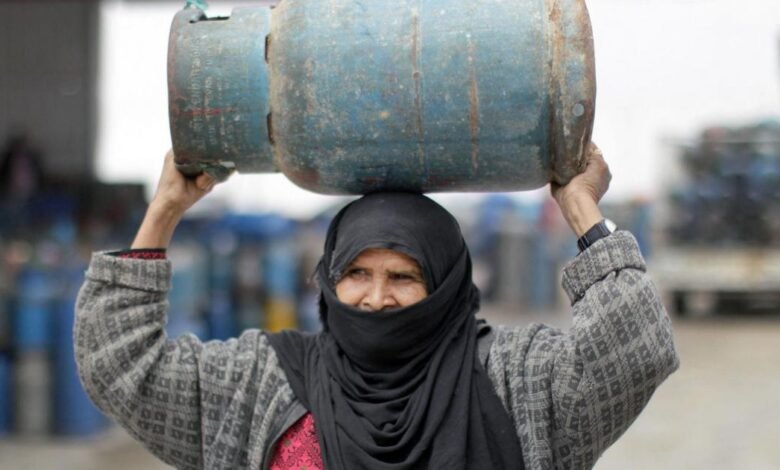
The Gaza Petroleum Authority has officially adopted a new mechanism for distributing cooking gas rations to citizens registered in its electronic system. The decision, announced on Thursday, ties the quantity of gas allocated to each household directly to the number of its legally registered members. This move aims to respond to public demands and achieve greater equity in the distribution of available supplies.
In a press statement, the Authority clarified that the new mechanism will take effect starting from the twelfth distribution cycle. It emphasized that this restructuring does not imply an increase in the total volume of gas supplied to the Gaza Strip. Due to ongoing blockades and field restrictions on importing gas, the overall quantities entering the sector remain fixed. The primary goal is to align individual rations with actual household needs rather than increasing the national stockpile.
Under the new regulations, specific weight limits are assigned based on family size. A single-person household will receive 6 kilograms of gas, while families consisting of two to four members will be allocated 8 kilograms. Households with five to seven members will receive 10 kilograms, and those comprising eight members or more will get 12 kilograms. Corresponding official prices have been set at 56 shekels for the 6-kilogram ration, 74 shekels for 8 kilograms, 93 shekels for 10 kilograms, and 110 shekels for the 12-kilogram portion.
The Authority estimates that approximately 45 percent of registered citizens will see an increase in their allocated gas shares. The majority of households will maintain their previous allocation of 8 kilograms, while only a very small percentage will experience a reduction in their quota, consistent with the new classification tied to family size. Family member counts are calculated through direct electronic linkage with the Civil Affairs database. Any changes occurring during the current cycle will be reflected in the records of the subsequent cycle.
Some citizens may notice a one-time exceptional change in their position within distribution lists. The Authority attributed this to logistical sorting processes that prioritize filling the largest rations first. Distributors are strictly required to adhere to the announced official prices. The Authority warned against exploiting citizen needs and stated it would take legal action against any entity proven to exceed the set prices. Citizens are urged to report violations through the Authority’s complaints department.
While implementing these internal adjustments, the Authority noted that the restructuring might extend the duration of the distribution cycle by no more than one week. It reiterated its appeal to international bodies to pressure for the lifting of restrictions on gas truck imports to restore normal quantities and alleviate the ongoing shortage crisis.