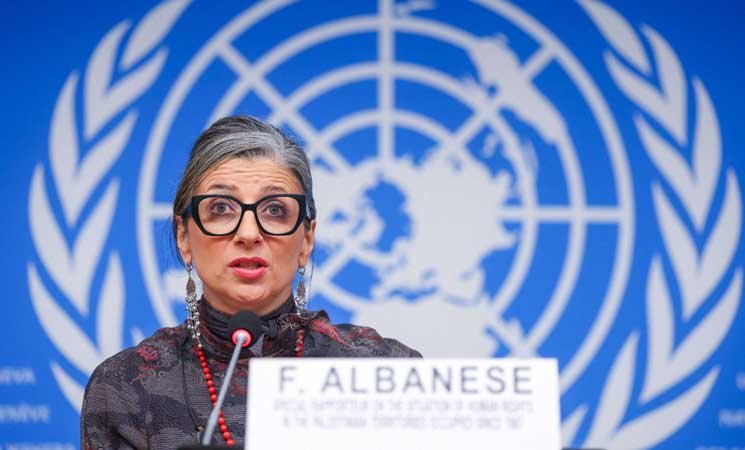
Francesca Albanese, the UN Special Rapporteur on human rights in the occupied Palestinian territories, stated that the Israeli genocide in Gaza has not ended despite three years passing since its inception. Speaking to Anadolu Agency in Istanbul, she emphasized that the scale of devastation in Gaza and the worsening situation in the West Bank require measures far beyond diplomatic condemnations.
Ongoing Destruction and International Response
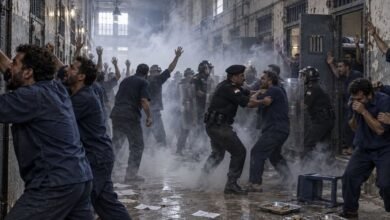
The Italian human rights lawyer described the situation on the ground as catastrophic, surpassing what words can describe. She noted that starting from October 8, 2023, with US support, Israel launched a genocidal war in Gaza resulting in more than 74 thousand martyrs and over 175 thousand wounded, mostly children and women. The conflict caused damage to 90 percent of infrastructure. Albanese questioned the international community’s response, particularly policies of governments supporting Israel, including Washington which provides military and financial aid and uses veto power in the Security Council to shield Tel Aviv from accountability.
‘Survivors’ Misnomer
Albanese warned against labeling Palestinians as “survivors” of genocide, arguing this implies the threat has passed. She pointed out that 70 percent of the sector remains under Israeli military control, which continues to level as much as possible. Comparing the current events to historical colonial genocides of indigenous peoples in America and Australia, she suggested history depends on who writes it, noting humanity is at a crossroads.
She framed the conflict as a struggle between two camps: one seeking to continue genocide, exploitation, and erasure of Palestine, comprising the US, Israel, and allies advocating for militarization; and another consisting largely of peoples and some governments opposing these actions. Regarding political gains by leaders criticizing the genocide, she asserted that killing children disconnects leaders from reality, making their victimhood narratives unsustainable.
West Bank and Settlement Restrictions
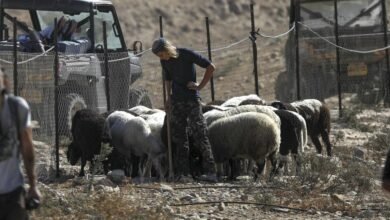
Despite a ceasefire announced on October 10, 2025, daily bombings have killed 1467 Palestinians and injured 5161, while restricting agreed-upon humanitarian aid for 2.4 million residents, including 2.15 million displaced. In the West Bank, including East Jerusalem, intensified attacks since the Gaza war began have resulted in 1210 martyrs, 13 thousand and 350 injured, and 26 thousand arrests. These include home demolitions, mosque burnings, land confiscation, and settlement expansion.
Albanese welcomed moves by twelve Western nations to restrict trade with settlements but questioned the scope, noting the lack of explicit reference to East Jerusalem. She highlighted UK restrictions as a long-awaited policy shift acknowledging the occupation’s illegality but criticized the narrow focus on settlements. She also addressed Europe’s dependency on Washington, stating the relationship resembles subordination rather than alliance due to US threats against partners. Finally, she urged Middle Eastern states to take seriously claims regarding an alleged “Greater Israel” project extending into Jordan, Syria, and Iraq based on biblical assertions.