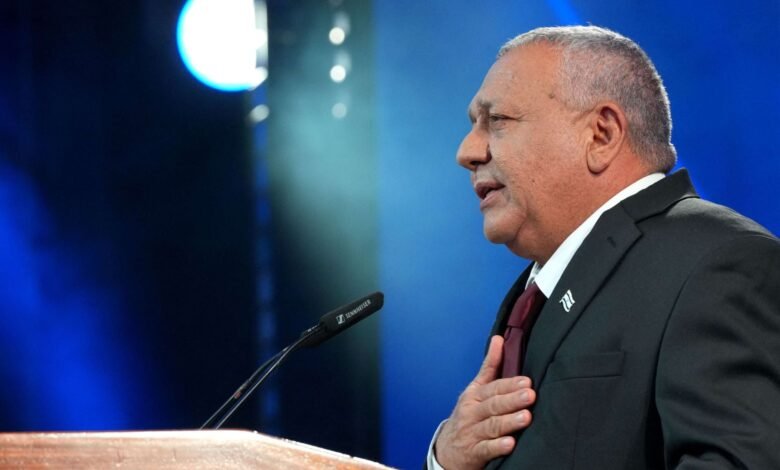
Gadi Eisenkot, the leader of the Yesh Atid party and the politician currently mandated to form Israel’s new government, stated that the nation’s complicated reality necessitates the immediate establishment of an emergency administration. Speaking before his party’s lawmakers within the Knesset building, as reported by Yediot Ahronot, Eisenkot emphasized his willingness to collaborate with other political factions to ensure stability.
“We are entering the Knesset at a time when the State of Israel stands at a crossroads; perhaps on one of its most difficult days since its founding,” Eisenkot declared. He affirmed that his team would work alongside partners and extend hands to all other parties, noting that they have already invited additional entities to join the process. He reiterated the group’s commitment to the “Charter of Those Who Serve,” describing it as a binding principle for all members involved in the formation efforts.
Eisenkot stressed that the complex situation demands the creation of an emergency government as quickly as possible, without abandoning their core principles or constants. This appeal follows President Isaac Herzog’s official assignment of the government formation task to Eisenkot on Sunday, granting him a 28-day deadline, which can be extended by an additional 14 days with presidential approval.
Media reports, including those from Channel 13, indicated on Monday that Eisenkot and Avigdor Lieberman, leader of the Israel Beiteinu party, agreed to negotiate with Haredi (ultra-Orthodox) parties in an attempt to build the upcoming administration. These talks persist despite ongoing disagreements regarding the Haredi demand for exemptions from military service for their followers. The Haredi sector is primarily represented by two major Knesset factions: Yehudut HaTorah, representing Ashkenazi ultra-Orthodox Jews with seven seats, and Shas, representing Sephardic and Eastern ultra-Orthodox Jews with six seats. Together, these two parties hold 13 out of the 120 total seats.
To secure a parliamentary majority requiring 61 votes, Eisenkot’s bloc, which holds 48 seats, would need the full support of these Haredi parties. Meanwhile, the Joint List, led by Youssef Jabareen, has expressed readiness to provide a parliamentary safety net for an Eisenkot-led government without formally joining the coalition. In exchange, the Joint List demanded safeguards for Arab citizens, including halting home demolitions, combating incitement against Arabs, addressing crime, and opening a political horizon for Palestinians. As of now, Eisenkot has not clarified his stance on offers from Arab parties to support his government from outside the coalition framework.