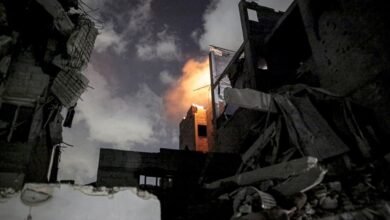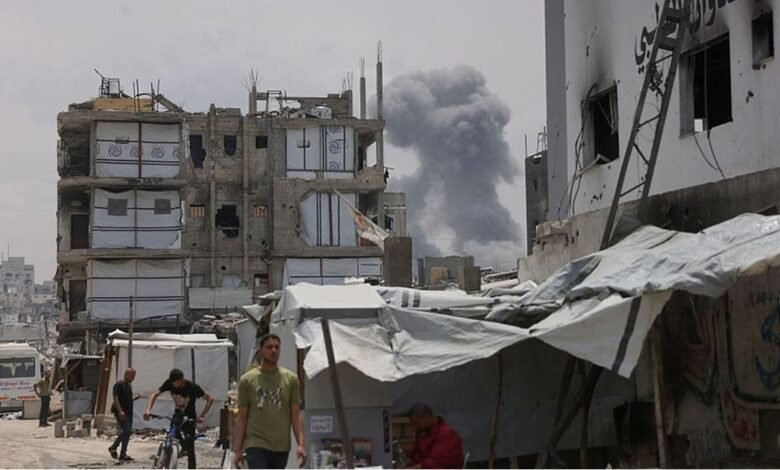
Displaced Palestinians in the Gaza Strip are trapped between two lethal threats: the risk of death from airstrikes and the immediate danger of structural collapse. Following the recent tragedy at “Al-Saada” building in the Al-Sana’a area, where over 100 people were buried alive, thousands of families find themselves living in partially destroyed structures with cracked walls and failing columns. The Ministry of Internal Affairs has issued urgent warnings regarding approximately 2,000 inhabited but damaged buildings across the sector that could collapse at any moment.
A Nightmare of Crumbling Ceilings
Abdulsalam Nasser, a displaced father of nine, sleeps in a room of his apartment in the Al-Karama area of northern Gaza, constantly watching the cracked ceiling for falling debris. Half of his building was destroyed by heavy bombardment, while the remaining section struggles to stay standing. Nasser explained that returning to his ruined home is not a luxury but a necessity driven by the harsh reality of life in worn-out canvas tents, which offer no protection against the cold or weather. However, he admits he is seriously considering abandoning the building for the street out of fear that the roof will give way under the weight of winter rains and winds.
Suad Ali, another displaced mother, shared her dilemma after leaving her partially destroyed home. She described living in fear that the roof or walls would fall on her children during the night. Ultimately, she moved to a tent near the Gaza port, acknowledging that while the tent offers no safety from the elements, staying in a building prone to collapse posed an unacceptable risk to her family’s lives. She stated she was caught between two difficult choices: a house that might crush them or a tent that exposes them to the winter.
Official Warnings and Lack of Alternatives
The collapse of the “Al-Saada” building on Wednesday killed 21 Palestinians, including 12 children, serving as a grim reminder of the ongoing suffering. The Ministry of Internal Affairs emphasized that this disaster rings the alarm bell again for the hundreds of other damaged structures. The ministry attributed the continued residence of people in these hazardous buildings to the lack of alternative shelter, the prohibition of temporary housing imports, and the deterioration of existing tents.
With approximately 1.6 million Palestinians living in displacement camps and tents due to widespread destruction caused by the war, the ministry warned that the risks of building collapses increase significantly with the approach of winter and its associated severe weather conditions. They called upon international bodies, mediators, and guarantors of the ceasefire agreement to take immediate action to introduce temporary housing units into Gaza. These units are deemed essential to provide safe alternatives for hundreds of thousands of Palestinians currently residing in dilapidated tents or threatened buildings, who lack even the basic prerequisites for safe accommodation.