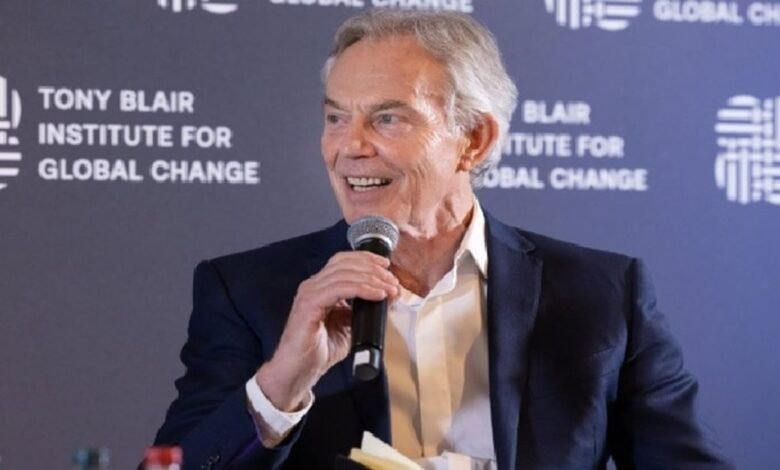
Former British Prime Minister Tony Blair has urged the United Kingdom to work towards rejoining the European Union over the next decade. This intervention, detailed in a new policy paper published by the Tony Blair Institute, places the issue of Brexit back at the center of political debate and increases pressure on current Prime Minister Andy Burnham regarding the Labour Party’s position on future relations with Brussels.
The institute’s document, titled “A Path to a Reformed Europe,” advocates for Britain to accept potential conditions for membership, including freedom of movement and financial contributions. Blair stated in the introduction that the UK should declare its readiness to enter into a formal relationship with Europe if terms are suitable. He proposed starting a negotiation process where “everything is on the table,” without pre-agreeing on any specific point before reaching a comprehensive agreement. The researchers behind the paper suggest that during this ten-year period, Britain should aim for a “significantly reformed” European Union.
This call comes as Burnham faces internal pressures within the Labour Party to revisit the party’s stance on EU membership. Earlier this week, Burnham refused to rule out including a return to the EU in the party’s upcoming election manifesto, describing it as a “question for another day.” Previously, he had indicated no desire to seek membership in the near term, reflecting the political sensitivity surrounding the 2016 referendum which resulted in a vote to leave.
Blair’s position aligns with views from other prominent Labour figures. Defence Secretary Wes Streeting described the Brexit referendum result as a “catastrophic error” and called for the party to seek re-entry. Although Burnham expressed hope last year that he would see Britain return to the EU within his lifetime, he emphasized that his government does not intend to make immediate membership a goal.
These developments have reignited debates over the deep political and social divisions caused by the 2016 vote. Some Labour officials, such as Culture Secretary Lisa Nandy, warn against reopening “circular arguments” from the Brexit era, arguing that priority should be given to managing the consequences of leaving rather than debating membership itself. Concerns persist that reviving the issue could reactivate polarization, particularly in areas where Reform UK has gained ground.
Conversely, a poll conducted by YouGov for the pro-EU campaign Best for Britain suggests strategic benefits. The survey of over 13,000 people in June indicated that pledging to seek EU membership could boost Labour’s seats in the House of Commons from an estimated 136 to 321. The results suggest such a pledge might unify progressive voters without increasing support for Reform UK. However, these figures predate Burnham’s premiership, indicating potential trends rather than guaranteed outcomes.
Beyond mere membership, the institute proposes using the prospect of rejoining as leverage to accelerate reforms within the EU single market, particularly in energy and technology sectors. The paper urges the government to abandon current “red lines,” such as rejecting freedom of movement or the single market. Instead, it suggests adopting a principle of joining rules and initiatives that prove economically or strategically beneficial. This raises broader questions about the nature of the relationship Britain seeks to build with Europe a decade after Brexit, shifting focus from managing separation effects to reshaping ties on new foundations.