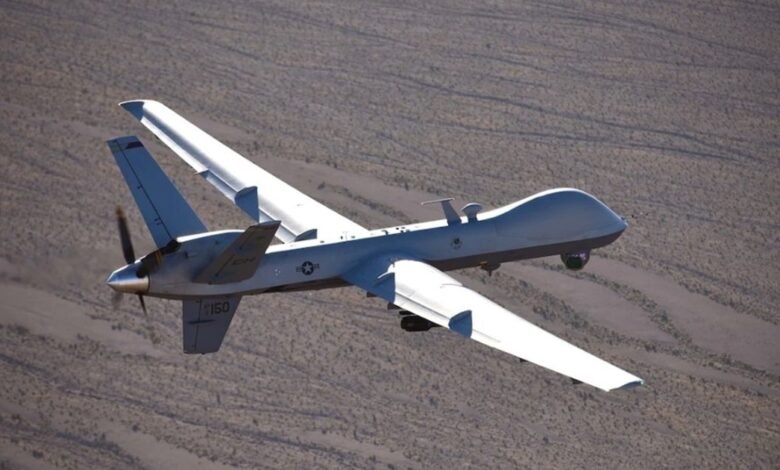
The United States military is currently reviewing plans to redistribute its fleet of MQ-9 Reaper unmanned aerial vehicles across multiple global theaters. This strategic assessment comes amid rapid military movements involving several regions and continues as hostilities persist between Washington and Iran, according to reports citing sources familiar with the operational plans.
Initial discussions within the Pentagon focus on shifting aircraft currently operating under the jurisdiction of the US Africa Command to the US Southern Command, which oversees operations in South America. This move is part of a broader restructuring of American military equipment deployment. However, parallel deliberations are underway regarding the potential dispatch of some of these drones to the Middle East. The proposed redeployment aims to bolster American forces in the region following significant losses of military assets during recent confrontations with Iranian forces.
Among the lost assets were MQ-9 Reaper drones, which play a critical role in reconnaissance, intelligence gathering, and precision strike missions. The reintroduction of these aircraft to the Middle Eastern theater would significantly enhance surveillance and targeting capabilities for US troops already engaged in the area. Recent reports indicate that American drones have been shot down during clashes, underscoring the urgency of replacing these lost systems and reinforcing aerial superiority.
These internal debates reflect a continuous reassessment of US military positioning. As operations intersect across the Middle East, Africa, and South America, Washington appears to be recalibrating its resource allocation to align with shifting strategic priorities. The potential transfer highlights the interconnected nature of current American military engagements and the need to maintain operational readiness in high-risk zones.
The MQ-9 Reaper remains a cornerstone of US aerial warfare due to its versatility in both intelligence, surveillance, and reconnaissance (ISR) roles and kinetic operations. Its absence from active combat zones in the Middle East has created a capability gap that commanders are eager to fill. By reallocating drones from other commands, the military seeks to balance global commitments while addressing immediate tactical deficiencies caused by recent attrition.
No final decision has been announced, but the ongoing evaluation suggests that the Middle East remains a primary focus for US military resources. The situation underscores the intensity of the conflict with Iran and the extent to which it has impacted American logistical and operational planning. As tensions remain high, the redeployment of these advanced drone systems could signal an escalation or a sustained commitment to maintaining a robust presence in the region.