A Short-Term Political Tactic
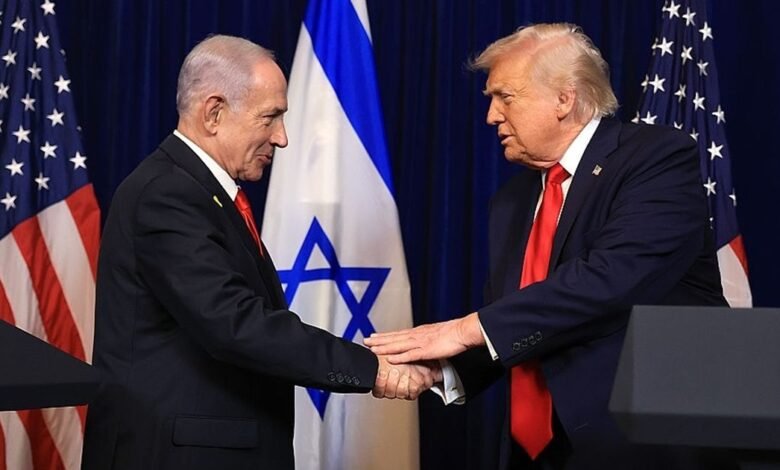
Political analyst Shai Golden has launched a sharp critique in Israel Hayom regarding what he describes as a “deceptive alliance” between US President Donald Trump and Israeli Prime Minister Benjamin Netanyahu. According to Golden, Trump’s recent endorsement of Netanyahu represents merely another phase in their historically volatile relationship. The analyst suggests that Trump is employing his standard pressure tactics on the Israeli electorate by presenting a binary choice: either support the re-election of Netanyahu or face American neglect and the abandonment of complex regional files, particularly those concerning Iran.
Fragility of the Partnership
Golden emphasizes that Trump’s positions are inherently unstable, noting that current praise could quickly turn into harsh criticism during closed-door discussions within days. He characterizes this political coalition as fundamentally short-lived, tied strictly to the remaining two years of Trump’s term in the White House. The analyst warns against relying on these understandings, raising questions about the scenarios that will unfold once this period expires, especially if a Democratic administration takes power. Such a transition could lead to a complete breakdown in relations and trigger catastrophic strategic repercussions for Israel.
Security Realities vs. Campaign Promises
Doubting the ability of current promises to provide a genuine protective umbrella for Tel Aviv, Golden points out that similar assurances have been repeated hundreds of times across various platforms without actual implementation. While Trump’s electoral rhetoric links the elimination of the Iranian threat to the continued presence of both leaders in power, reality indicates that all security threats remain unchanged. The Iranian nuclear program and the Tehran regime persist, alongside the ongoing presence of Hamas, Hezbollah, and the Houthi movement. Furthermore, security tensions continue to escalate in the West Bank.
Regional Military Shifts
The analyst highlights increasing military movements in the regional sphere, including the strengthening of Turkish military capabilities and Egyptian troop concentrations near borders. These developments demonstrate that verbal pledges and social media posts do not reflect the true scale of security complexities on the ground. Golden concludes that Trump’s calls for the Israeli public to vote for Netanyahu fall within the context of political marketing based on unguaranteed commitments. Past experiences with both leaders prove that betting entirely on electoral pledges to resolve complex strategic crises is unreliable.