Allegations of Conflict of Interest
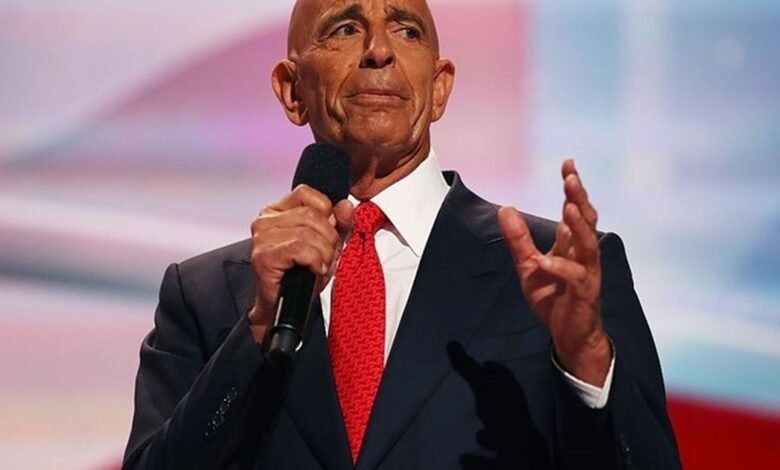
Three sources told Reuters that Thomas Barrack, the US Special Envoy to Syria and Iraq and Ambassador to Turkey, attempted to include T.I. Capital, managed by his business partner Ziad Ghandour, in a project to rehabilitate the oil pipeline connecting Kirkuk in Iraq to Baniyas in Syria. This move has sparked questions regarding adherence to professional ethics standards. In July, Iraq and Syria signed memoranda of understanding with an alliance comprising T.I. Capital, Chevron, and Qatar’s UCIC Holding to conduct technical and financial studies for the pipeline’s restoration. The route offers an alternative export path for oil, bypassing the Strait of Hormuz.
Two sources familiar with the discussions stated that Barrack pressured officials to include Ghandour’s company in the project during meetings with Iraqi and Syrian counterparts following the outbreak of war with Iran. In June, Barrack and Iraqi Prime Minister Ali Al-Zaidi issued a joint statement praising progress on the memorandum of understanding with T.I. Capital, without mentioning the other two partners involved.
Financial Ties and Expert Opinions
Barrack’s financial interests are linked to a real estate project managed by T.I. Capital near San Francisco. Declared arrangements allow him to receive up to 20 percent of its profits. He also disclosed providing consulting services to the project and pledged to retain his stake in it. Two attorneys specializing in ethics noted that his relationship with Ghandour does not constitute a criminal conflict of interest unless he derives direct financial benefit from the pipeline project. However, experts warned that his efforts to involve his partner’s company could raise doubts about his impartiality, even in the absence of direct financial gain.
Official Denials and Project Background
A spokesperson for the US State Department stated that Barrack has “no connection, role, or financial interest” in the pipeline project, confirming compliance with ethical rules. The department clarified that his comments reflect US policy interest in regional energy integration. Barrack’s office, T.I. Capital, Ghandour, and UCIC Holding did not respond to requests for comment. Barrack’s office and Chevron declined to comment.
The Kirkuk-Baniyas pipeline dates back decades but has been halted since 2003. Plans to revive it gained momentum after Iran restricted navigation through the Strait of Hormuz during the war. Reuters sources estimated that reconstruction would take at least four years and cost up to $15 billion. In July, Iraq included T.I. Capital in an alliance to evaluate the Azaz gas field alongside UCIC Holding and ConocoPhillips. While the company claims participation in projects at the Syrian port of Tartus, Reuters was unable to verify the nature of its role there.