Strategic Expansion of Naval Control
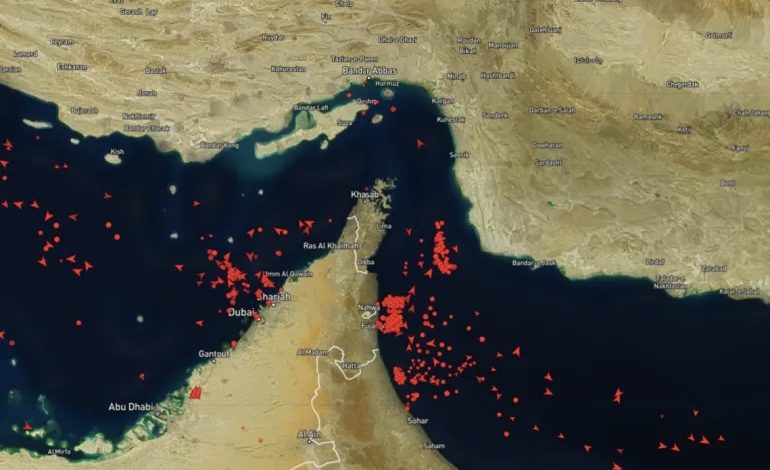
The Islamic Revolutionary Guard Corps (IRGC) officially declared its intention to establish a “restricted zone” in extensive water bodies located outside the Strait of Hormuz. This announcement was made on Wednesday by Hossein Makki, a spokesperson for the IRGC, according to Iranian media reports. The new operational area is described as stretching from Chabahar to the waters of the Oman Sea and the Arabian Sea. The move is explicitly framed as a direct response to what Tehran describes as an American blockade imposed on Iran.
Redefining Strategic Waterways
Makki emphasized that the geopolitical significance of the Strait of Hormuz has evolved beyond its traditional role as a simple maritime passage. He stated that the strait has become one of the critical equations in the global system and a decisive factor in war developments. To reflect this shift, Iran has expanded the scope of its maritime traffic management and surveillance capabilities. Previously, the jurisdiction for managing ship movements was confined strictly to the Strait of Hormuz. Now, this authority has been significantly widened to encompass broader surrounding areas.
Operational Mechanisms and Penalties
The IRGC spokesperson detailed the mechanics of the newly designated restricted zone. He noted that specific coordinates and operational details will be disclosed at an appropriate future time. However, he outlined the consequences for vessels violating the new protocols. If a ship passes through the sanctioned zone within the Strait of Hormuz without coordination, it will face immediate exclusion from all maritime services. This includes the cessation of insurance coverage, support services, and other logistical assistance provided to that vessel. Furthermore, this penalty extends to any future transits through the Strait of Hormuz, effectively isolating non-compliant ships from essential maritime infrastructure.
Broader Regional Context
This declaration follows a similar statement made earlier in the week by Mohsen Rezaei, Secretary of the Supreme National Security Council. On Tuesday, Rezaei announced plans to create a “no-fly zone” across the entire Gulf and its surrounding regions. Both announcements serve as coordinated measures by Iranian leadership to counteract what they characterize as aggressive American economic and military pressure. By expanding control over wider maritime corridors, Tehran aims to assert greater leverage over global shipping routes and demonstrate its capacity to disrupt international trade flows in retaliation for sanctions.