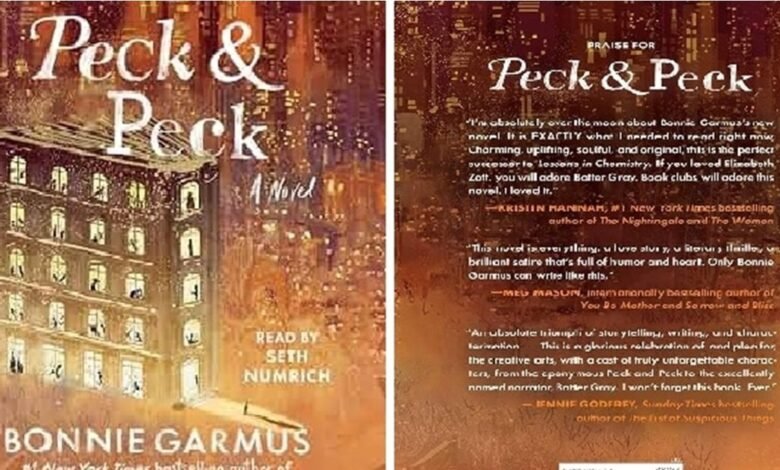
In an era where technology accelerates and spaces for non-commercial arts shrink, American author Bonnie Garmus returns to fiction through an unexpected portal: a prestigious yet disorganized poetry magazine. Her new novel, “Peck & Peck,” shifts the debate on poetry’s value from elite cultural circles into a satirical narrative that challenges a society measuring worth by monetary yield. The story defends writing as a form of knowledge and life understanding, contrasting it against market logic.
Clare Clark, reviewing the book for “The Guardian” on October 13, 2026, notes that while the novel retains Garmus’s humor and wild imagination, it may not replicate the exceptional success of her debut, “Lessons in Chemistry.” That first work sold approximately nine million copies worldwide, was translated into more than forty languages, and became an Emmy-winning television series in 2023. Its protagonist, Elizabeth Zott, a chemist facing gender discrimination in the nineteen fifties, resonated with readers following the rise of the #MeToo movement. However, Garmus now faces a different challenge: defending poetry, an art form less likely to attract a mass audience in a culture preferring easily marketable products.
Set in New York during the nineteen eighties, “Peck & Peck” takes place within a magazine described as one of the world’s most mysterious, high-status, and dysfunctional publications. It employs thirty-nine editors united by the goal of publishing the best poems, while thousands of rejected manuscripts are burned weekly by postal staff who are former convicts. The narrative follows Pat Gray, a young man whose parents, a history professor and a typeface designer, desire stability for him. Pat finds himself working in the basement producing photocopies but becomes entangled in a bitter conflict between the magazine’s twin editors, who share a deep rivalry.
Garmus constructs a world of exaggerated strangeness where personal disputes merge with administrative intrigues. The building features a large glass dome, an pneumatic tube system for messages, and plants pruned according to alphabetical order, creating a magical atmosphere reminiscent of early John Irving works or Harry Potter worlds. This setting highlights the irony of an institution claiming to celebrate words while engaging in power struggles.
The novel poses broader cultural questions about the value of art that generates no profit. It contrasts Pat’s passion with the economic reality perceived by his mother, who acknowledges poetry’s low financial return. Yet, the narrative refuses to accept this as a final judgment on artistic value. Instead, it argues that poetry expands attention and contemplation, offering linguistic possibilities beyond direct utilitarian communication. The magazine’s rejection criteria, which exclude poems written on scented paper or those mentioning cats, puppies, sunsets, and rainbows, serve as a satire of institutions defining cultural quality. Through these contradictions, the story explores who holds the power to define cultural value and whether standards meant to protect art instead close doors to experimentation.