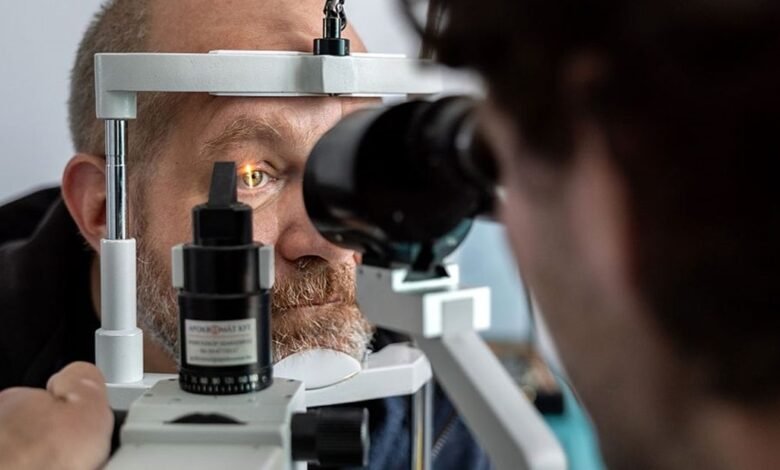
A multinational study published in the New England Journal of Medicine has reported significant progress in restoring visual function for patients suffering from advanced retinitis pigmentosa. The research utilized an experimental gene therapy combined with optogenetics, a technique that reactivates surviving cells within the retina to respond to light. The trial involved 10 participants who were legally blind due to severe degeneration of photoreceptor cells, yet retained minimal residual vision.
Clinical Outcomes and Visual Improvement
The results indicated that seven out of the ten patients experienced an increase in light sensitivity following the treatment. Among them, six showed improvements deemed clinically significant by the researchers. While the participants did not regain high-definition vision or the ability to read and recognize faces normally, they demonstrated enhanced functional capabilities. When wearing specialized electronic glasses, some patients could detect objects in front of them and reach toward them with greater accuracy.
Neurological recordings confirmed that visual information was successfully transmitted to the visual cortex in the brain, where it was processed. However, the study authors emphasized that these findings represent a partial and limited restoration of visual function rather than a complete cure for blindness or a return to natural sight levels.
Mechanism of Optogenetic Therapy
Retinitis pigmentosa is a group of genetic eye diseases that progressively damage light-sensitive cells in the retina, often leading to night blindness and loss of peripheral vision before advancing to severe vision loss. In late stages, the primary photoreceptors are extensively damaged. To bypass this, the therapy targets retinal ganglion cells, which remain alive but do not naturally respond to light.
The experimental treatment involves a single intraocular injection carrying genetic instructions to produce ChrimsonR, a light-sensitive protein. This modification enables the targeted ganglion cells to react to light stimuli. Patients must also wear custom electronic glasses that capture their surroundings and convert them into specific light patterns projected onto the retina. These patterns activate the genetically modified cells, allowing them to transmit visual signals to the brain.
Connection to Nobel Prize Recognition
This development builds upon foundational research recognized by the Nobel Prize in Physiology or Medicine awarded to Karl Deisseroth, Peter Hegemann, and Georg Nagel. Their work established optogenetics, a method using light to control genetically modified neurons. Originally developed as a tool for studying brain circuits, memory, and behavior, the technology has now transitioned into a therapeutic approach for sensory restoration.
The current study follows an initial proof-of-concept demonstration five years prior involving a single patient. By expanding the data set to include ten individuals, the researchers provide stronger evidence regarding the viability of moving optogenetics from laboratory neuroscience tools to clinical applications. Despite these promising early results, the treatment remains in its preliminary stages. Further studies with larger cohorts and longer follow-up periods are necessary to refine visual quality and identify which patients benefit most from this intervention.