An Israeli analyst has warned that Turkey and Qatar are actively working to establish an alternative regional security and political order designed to curtail the influence of the United States and Israel. The assessment comes from Amit Yagur, a reserve army colonel, in an article published on October 25, 2026, by the newspaper Maariv.
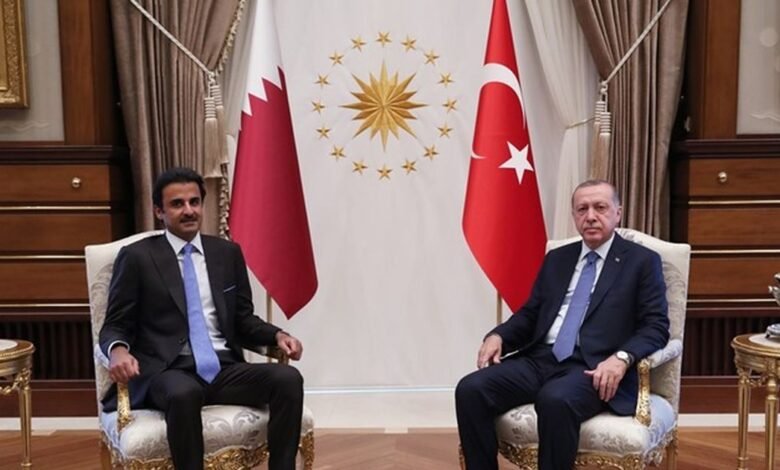
Yagur argues that recent diplomatic and military maneuvers by Ankara and Doha aim to reshape regional balances of power. He points to a joint military cooperation agreement and high-level diplomatic summits as evidence of a coordinated effort to prevent Washington and Tel Aviv from imposing new arrangements in the Middle East, specifically concerning Iran and maritime security in the Strait of Hormuz.
The analyst highlights statements made by Qatari officials during a meeting of Gulf Cooperation Council foreign ministers, which included Iranian Foreign Minister. These statements emphasized diverging interests between Israel and the US versus those of the Gulf states. Yagur notes that Doha has proposed including Turkey and Pakistan in strategic dialogues with Tehran to facilitate a non-aggression pact. This is interpreted as a move to exclude Israel and the US from Gulf security frameworks while creating a protective umbrella led by Turkey and Qatar, potentially involving Iran, focused on securing energy supplies and navigation routes.
According to Yagur, this initiative operates on two parallel tracks: military-industrial and political-diplomatic. He cites a memorandum of understanding signed in Doha by Turkey, Qatar, Pakistan, and Indonesia to enhance security cooperation and joint production capabilities. The agreement, reportedly named “Badr,” carries historical and religious significance intended to frame the alliance as an independent Islamic entity separate from Western support, aiming to shift the center of gravity in the Islamic world away from Saudi Arabia.
The division of roles within this coalition involves Qatar providing funding, Turkey supplying technology and drones, Pakistan offering military expertise, and Indonesia contributing its demographic weight and strategic location near the Malacca Strait. Yagur suggests Jakarta’s participation reflects a desire for military technology without US conditions and a response to domestic public sentiment, potentially avoiding Abraham Accords integration. This trend is linked to broader diplomatic and technological boycotts of Israel in Southeast Asia, including Malaysia’s restrictions on Israeli-linked applications.
Diplomatically, Yagur points to a summit in Istanbul hosted by Turkish Foreign Minister Hakan Fidan, attended by counterparts from Egypt, Pakistan, and Saudi Arabia, alongside officials from Britain, France, and Germany. The discussions covered the Strait of Hormuz, Yemen, Gaza, Ukraine, and the Palestinian issue. Yagur views this as an attempt by Ankara to build an informal diplomatic framework that serves as an alternative to US-led alliances.
The analyst observes that while Saudi Arabia participated in the Istanbul talks, it was absent from the Doha military agreement, indicating Riyadh’s strategy to maintain diplomatic presence while relying on US defense ties. However, growing Turkish-Pakistani-Indonesian cooperation may alarm India, especially given tensions over the India-Middle East-Europe Economic Corridor (IMEC). Yagur urges the US and Israel to strengthen coordination with India and accelerate IMEC implementation to counter these shifts. He also calls for a US-Saudi defense pact and pressure on European nations and Indonesia regarding their military ties with Pakistan and Qatar, warning that a lack of coordinated positioning among the US, Israel, India, Saudi Arabia, and Greece could jeopardize future regional security and economic structures.