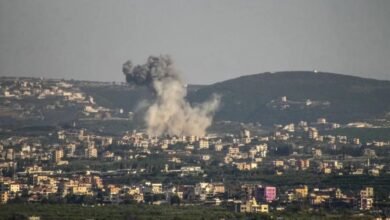
Commander Killed in Airstrike
Ahmed Al-Batsh, known by his kunya Abu Asama, has been killed following an Israeli airstrike that targeted a civilian vehicle in the Safatawi district, located north of Gaza City. The incident occurred late on Monday evening. Palestinian medical sources confirmed early Tuesday morning that Al-Batsh died as a result of the strike, which also injured several other individuals.
The attack specifically targeted a vehicle near the Al-Basha supermarket in the Safatawi neighborhood. According to medical reports, the body of Al-Batsh was transported to Al-Shifa Hospital in Gaza City alongside several wounded victims who were extracted from the scene of the attack. The precise circumstances surrounding the targeting of the vehicle remain under observation, but the outcome resulted in the immediate death of the militant leader and injuries to others present.
Leadership Role and Military History
Al-Batsh held significant operational responsibilities within the military wing of Hamas, the Izz ad-Din al-Qassam Brigades. At the time of his death, he served as the commander of the Jabalia Balad Battalion. This unit has been heavily engaged in fierce confrontations with Israeli forces throughout the Gaza Strip since the outbreak of war on October 7, 2023. Prior to his current role, Al-Batsh had also served as the Chief of Staff for the Northern Brigade, indicating his extensive experience in command structures and tactical planning within the organization.
Escalating Targeting of Militant Leadership
The killing of Ahmed Al-Batsh marks another significant loss for the Qassam Brigades’ leadership cadre. His death comes just days after the group announced the assassination of Muhammad Abdul Salam Al-Yazouri, known as Abu Haytham, who commanded the Khan Younis Brigade. Al-Yazouri was also killed in what the Brigades described as an Israeli targeted operation. These successive eliminations highlight a continued Israeli strategy aimed at decapitating the command hierarchy of armed factions in Gaza. The pattern of strikes against high-ranking officials suggests an intensified campaign to disrupt organizational structures and operational capabilities across different regions of the territory, including both the northern and southern sectors.