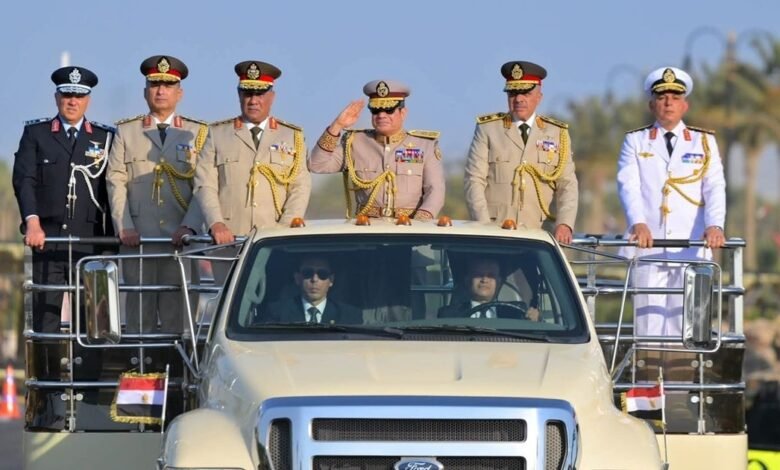
Egyptian President Abdel Fattah al-Sisi has confirmed that his current presidential term will conclude in 2030, explicitly denying any intention to amend the constitution for extension or to prepare a family member for succession. This declaration has reopened the contentious debate regarding potential successors, highlighting significant disagreements among opposition figures over viable candidates and the feasibility of reaching a consensus on a competitive presidential nominee.
Contested Candidate Lists
The discussion has centered on several prominent political names. Former MP and presidential candidate Ahmed Tantawi announced in November 2025 his intention to run again following consultations with civil and democratic forces. Additionally, human rights lawyer Khaled Ali suggested a list of potential consensus figures during a “Microphone” podcast interview. These include detained politician Abdul Moneim Aboul Fotouh, former presidential candidate Hamdeen Sabahi, former Foreign Minister Amr Moussa, former Investment Minister Mahmoud Mohieldin, and Journalists Syndicate head Khaled Al-Balshi.
The proposal of these names sparked widespread debate regarding selection criteria and the exclusion of other figures. Critics argue that the opposition faces substantial challenges in organizing and presenting a unified political and economic alternative capable of gaining public acceptance amidst a constrained public sphere and declining party presence.
Critiques of Political Landscape
Journalist Magdy El-Galad warned of a missing political generation capable of assuming responsibility, attributing this deficit to governments since 1952 closing the public sphere and stifling the emergence of new leadership. He described the situation as a 75-year closure of the “politicians’ factory.” Meanwhile, Majdy Hamdan, a leader in the Conservatives Party, argued that preparing leaders does not create legitimacy; rather, the constitution remains the reference for presidential eligibility. He emphasized that post-2030 discussions should focus on guaranteeing genuine political competition and peaceful power transfer rather than fixating on specific names.
Political analyst Sayed Amin offered a pessimistic view, describing the current opposition as a “false pregnancy” lacking the capacity or desire for real change. He noted that while over 100 parties exist, most operate within narrow margins or under security influence, leaving a silent but broad popular opposition that requires a figure capable of providing trust and security.
Strategic Challenges and Constitutional Concerns
Opposition journalist Qotb Al-Arabi stated that Sisi’s announcement surprised many, except for close circles and the military establishment. He suggested the next four years are crucial for the opposition to transition from frustration to organized work, potentially seeking a consensus candidate or multiple nominees. He noted that the Muslim Brotherhood’s 2021 decision not to compete might alleviate fears for some factions.
Former presidential candidate Ayman Nour urged an end to what he termed the “burning of presidential names,” arguing that finding a president is currently impossible without national consensus on selection criteria. He stressed that introducing new names will not resolve the crisis without agreed-upon standards. Furthermore, concerns have been raised about potential extra-constitutional requirements for candidacy, such as training programs. Hamdan cautioned against imposing conditions outside the legal framework, asserting that legitimacy must derive from the constitution and voter will, not administrative judgments.