Assessment of Damage and Geographic Distribution
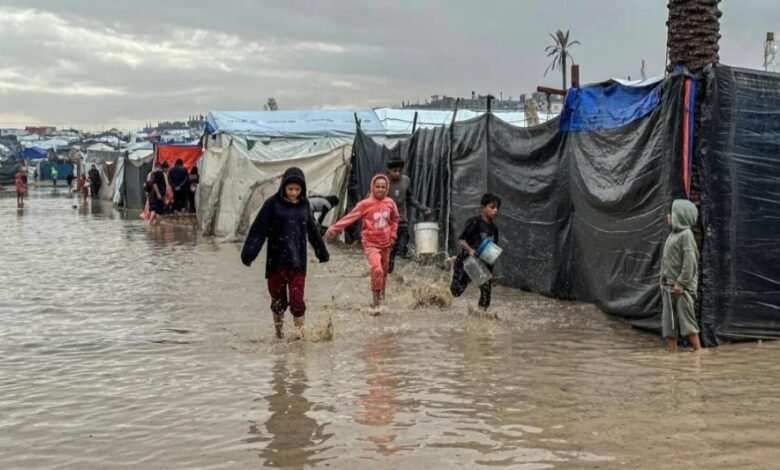
The High Committee for Winter Emergencies in the Gaza Strip announced the final tally of damages and field interventions resulting from the recent atmospheric low. The committee confirmed that 18,860 displaced families were affected, distributed across 339 camps located in various governorates throughout the territory. This assessment comes amid worsening humanitarian conditions, characterized by the destruction of infrastructure and a critical shortage of resources needed to mitigate the storm’s aftermath.
Regional Impact and Rescue Operations
In its statement on Wednesday, the committee detailed that the Gaza Governorate recorded the highest number of affected families, totaling 8,319. Meanwhile, the Middle Governorate led in terms of damaged sites, with 141 camps impacted. Operational rooms received 2,166 distress calls, which were distributed as follows: 903 in the Middle Governorate, 415 in Khan Younis, 306 in the northern sector, 271 in Gaza City, and 271 in Rafah.
Field teams identified approximately 6,000 locations where water accumulation obstructed citizen movement. Additionally, they documented 1,250 sites suffering from sewage flooding and street inundation due to the destruction of drainage networks and rainwater sewers. In response to these challenges, teams executed 218 missions. These operations included evacuating more than one thousand citizens, securing 27 buildings at risk of collapse, and carrying out 27 rescue, medical, and firefighting procedures.
Aid Distribution and Operational Constraints
To alleviate the impact on displaced persons, aid was distributed in the form of tents and tarps to 298 families. Furthermore, winter clothing and supplies were provided to approximately 2,100 individuals. However, the committee emphasized that field interventions face significant difficulties. Most rescue vehicles and equipment in various governorates are non-operational, compounded by a sharp shortage of spare parts, oils, and fuel. These constraints severely limit the teams’ capacity to respond to increasing distress calls.
The committee called on the international community to exert actual pressure to allow the entry of construction materials and caravans into the Gaza Strip. It also urged the provision of emergency relief support, spare parts, and necessary operational budgets to ensure the continued functioning of rescue teams and their ability to confront the consequences of weather lows.