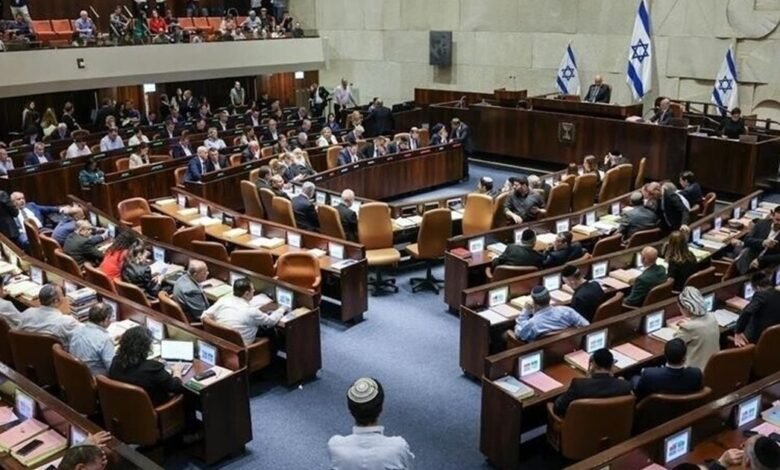
As final results from the Israeli elections continue to emerge, political analysts are outlining five distinct scenarios for forming the next government. According to an analysis by Arabi21, the current landscape is defined by a lack of clear direction between Prime Minister Benjamin Netanyahu’s bloc and Gadi Eisenkot’s Change and Renewal alliance. Neither side possesses enough seats to govern independently, meaning any viable coalition will require at least one party to break its electoral pledges.
Moran Azulai and Ofir Yonatan, political affairs editors at Yedioth Ahronoth, stated that the most immediate conclusion is that no stable majority of 61 seats exists on its own. Without relying on Arab parties, which achieved a record high of 19 seats, the Change and Renewal bloc remains far from forming an alternative government to Netanyahu. Preliminary results indicate a slight lead for Netanyahu’s bloc over Eisenkot’s, forcing political actors on both sides to reconsider their positions.
The first scenario involves an expanded unity government led by Netanyahu. This option, favored by President Isaac Herzog to avoid new elections, would require Netanyahu to abandon his promise to include all coalition partners and would force rivals like Eisenkot, Naftali Bennett, and Avigdor Lieberman to join forces with him despite previous vows against it. US President Donald Trump could also intervene to facilitate this outcome, potentially easing the path for expanding normalization agreements.
A second possibility is a rotation government with Netanyahu in the lead. While skepticism remains regarding whether Netanyahu would agree to share power, this scenario is not entirely ruled out. However, it would still require leaders of the Change and Renewal bloc to violate their commitments not to sit under Netanyahu’s leadership, with some arguing he does not even deserve a ministerial position following the October 7 attacks.
The third scenario envisions a Netanyahu government supported by defectors from the Change and Renewal bloc. The Likud party had prepared for this contingency by establishing a dedicated team to woo Knesset members from Eisenkot’s party post-election. A fourth option is a temporary minority government or transitional administration led by Eisenkot. This would require Eisenkot to break his stance, although he previously suggested openness to cooperation with Ra’am, a move opposed by Bennett and Lieberman. Arab parties have expressed willingness to help remove Netanyahu, potentially leading to the replacement of Knesset Speaker Amir Ohana and the formation of a committee of inquiry into October 7, which could trigger immediate dissolution of the Knesset.
The fifth and perhaps most likely scenario is a return to the polls. With the Likud party’s popularity slightly declining but remaining the largest, repeated elections may benefit Netanyahu. Analysts warn that voter fatigue could depress turnout among centrist and Arab voters, who turned out in unprecedented numbers this time.