A Mosaic of Egyptian Identity
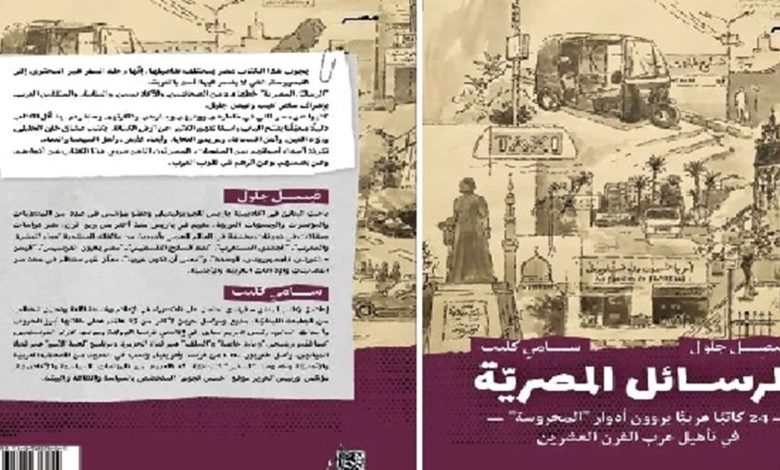
The literary series “Letters,” overseen by media figures Faisal Jalloul and Sami Klib, has shifted its focus to Egypt in its latest volume. The book features contributions from twenty-four Arab personalities, including journalists, academics, politicians, and artists. Each contributor offers a distinct narrative exploring how the Egyptian landscape, its people, and its cities have left an imprint on their individual experiences. This collection represents the sixth chapter of a project that previously examined Syria, Palestine, Morocco, the Gulf region, and Lebanon.
The editorial approach deliberately avoids a singular perspective. No single voice claims to possess the complete picture of the country, nor does any attempt to reduce a nation resistant to simplification into one definition. Instead, the text presents a polyphonic view where history runs parallel to the present, and politics remains intertwined with culture. The contributors move beyond standard tourist imagery to reveal a complex society holding memories of both war and peace, where diverse nationalities, languages, and cultures coexist, sometimes in tension.
Beyond Political Headlines
The project’s philosophy extends beyond mere travelogue or isolated country studies. It aims to foster a deeper exchange of knowledge, experience, and memory among Arabs, writing about one another to counteract the superficiality of modern news cycles. While contemporary media often highlights conflicts and political crises, this series seeks to illuminate daily life, art, and human experiences that truly shape nations. The contributors argue that knowing the wars is not enough; understanding the cultural fabric is essential.
Contributions range from reflections on Cairo, Alexandria, Tanta, and Hurghada to analyses of Nasserist economics, the Syrian-Egyptian union, the French campaign, Sufism, and Al-Azhar. The book also includes testimonies from individuals across Yemen, Sudan, Tunisia, Morocco, Algeria, Iraq, Oman, Bahrain, and Palestine. These voices ask what remains of Egypt in the collective Arab memory, highlighting how many Arabs know the country through cinema, music, literature, or personal encounters with Egyptian professionals before ever visiting.
The Open Question
The introduction describes Egypt as a “large museum of multiple temporal and cognitive layers.” The book does not claim to encompass all of Egypt but rather captures fragments of its mosaic. Each contribution adds a new piece, leaving spaces for readers to fill with their own knowledge or discoveries. The project poses an enduring question: What happens when Arabs attempt to rediscover each other through their own pens? For many, Egypt already exists within their consciousness through songs, films, books, or family stories. The volume suggests that some countries cannot be defined by final answers but instead open new doors through these shared letters.