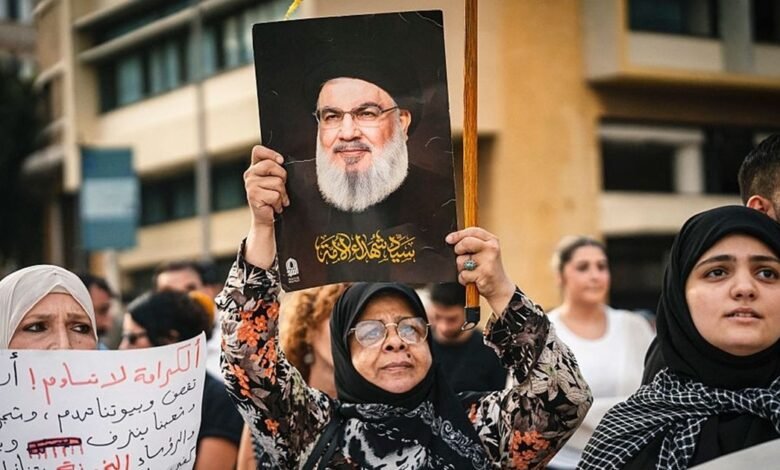
Hezbollah is preparing to commemorate the second anniversary of the killing of its former Secretary-General, Hassan Nasrallah, with a central rally scheduled for Sunday in Beirut’s southern suburbs. The party has announced that the main event will take place at 4:30 p.m. at the shrine of Nasrallah in Bir Hassan, honoring him alongside Hashem Safiedine and others who were killed in the same operation.
Supporters have begun gathering since early morning in various areas of southern Lebanon and the southern suburbs. Participants are displaying images of Nasrallah and waving Hezbollah flags as they prepare for the evening ceremony. In coordination with the planned activities, Lebanese authorities have implemented traffic restrictions. Internal Security Forces announced the closure of roads leading to the Nasrallah shrine from the Old Airport Road and Ziad al-Rahbani Highway starting at 1:00 p.m. until the conclusion of the event.
The commemoration occurs against a backdrop of significant transformations within Hezbollah and Lebanon since Nasrallah’s death on September 27, 2024. Following his assassination, which was carried out by Israeli airstrikes targeting the party’s central headquarters in the Harat Hreik neighborhood using heavy bunker-busting bombs, leadership transitioned to Naim Qasim. This shift followed the rapid elimination of Hashem Safiedine, who had briefly succeeded Nasrallah.
Nasrallah led the organization for over three decades, having taken office in 1992 after succeeding Abbas al-Musawi, who was also killed by Israel. His tenure included the July 2006 war and subsequent confrontations with Israeli forces. The recent anniversary marks a period of continued confrontation with Israel, even as diplomatic efforts intensify.
Lebanon and the Israeli occupation are currently engaged in security negotiations mediated by the United States. These talks propose a gradual Israeli withdrawal in exchange for the disarmament of Hezbollah and the deployment of the Lebanese Army. Hezbollah continues to reject these terms, maintaining its insistence on retaining its weapons arsenal. The upcoming events highlight the group’s effort to consolidate support while navigating complex regional dynamics and internal leadership structures established in the wake of the leadership vacuum created two years ago.