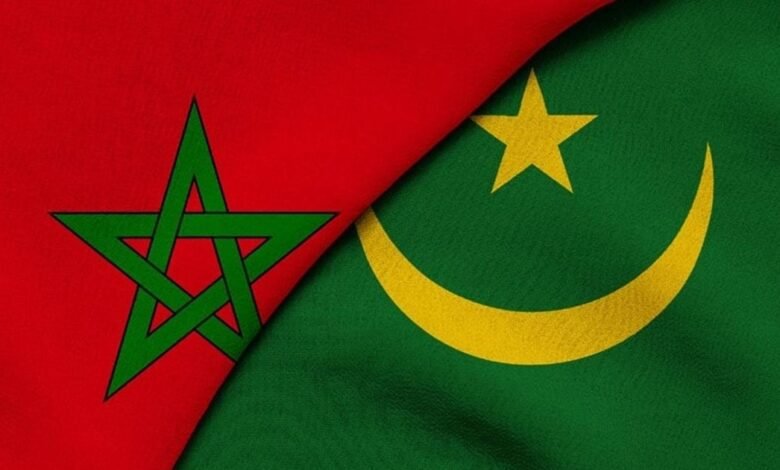
Media reports have brought the future of Laayoune back into the center of regional political debate. The city, located in southern Morocco near the Mauritanian town of Nouadhibou, is at the heart of discussions following a proposed Mauritanian initiative to form a commission that would clarify the final and permanent international boundaries of the territory. This development comes within the context of negotiations concerning the Western Sahara conflict.
The reports are based on a suggestion made during diplomatic talks held in Madrid on February 8 and 9, 2026. These negotiations involved Morocco, Mauritania, Algeria, and the Polisario Front. The talks were part of a political process supported by the United Nations and the United States, following the adoption of Security Council Resolution 2797 in October 2025. The renewed attention to the issue followed the release of UN Secretary-General António Guterres’ report on Western Sahara on October 1, which media interpretations linked to the Mauritanian proposal regarding border clarification.
According to the Moroccan newspaper “Al Ayyam 24,” the file returned to public discourse after these developments. However, linking the proposal to claims of sovereignty over Laayoune remains a matter of interpretation. The call to clarify borders as part of a political settlement does not necessarily imply a demand to annex a specific area, nor does it prove an agreement among parties to modify the status quo. Reports from the Mauritanian website “Madar” published on October 9 highlighted divergent readings of the proposal. The site noted that the idea of clarifying borders is insufficient to conclude that Nouakchott has changed its historical position or officially demands sovereignty over Laayoune.
Mauritanian journalist Sheikh Ahmed Amin emphasized the distinction between defining borders within a final agreement and claiming sovereignty over a specific region. He recalled that Mauritania relinquished its territorial claims in the Sahara under the Algiers Agreement signed on August 10, 1979. This context necessitates distinguishing between managing border files within Western Sahara negotiations and any actual shift in Mauritania’s legal and political stance toward the area.
No data confirms an agreement between Morocco and Mauritania regarding the transfer of sovereignty over Laayoune, nor is there an official Mauritanian statement clarifying the nature of the proposal. Laayoune’s strategic importance stems from its location on the western tip of the Cap Blanc peninsula, adjacent to Nouadhibou, a major economic and port center. Its proximity to maritime routes and northern ports makes it significant for coastal security and trade, but this strategic value does not independently indicate an official move to change its sovereignty.
Morocco includes Laayoune in its vision of territorial integrity, often referencing it in the phrase “from Tangier to Laayoune.” Meanwhile, Mauritania seeks to maintain relations with Morocco while managing its position in the Western Sahara negotiation process to protect its security and economic interests. No official Moroccan response has been issued regarding reports of Mauritanian efforts to gain recognition of sovereignty over Laayoune, and no explicit declaration from Nouakchott adopting such a claim has been clarified.