The Gap Between Overthrow and Institution
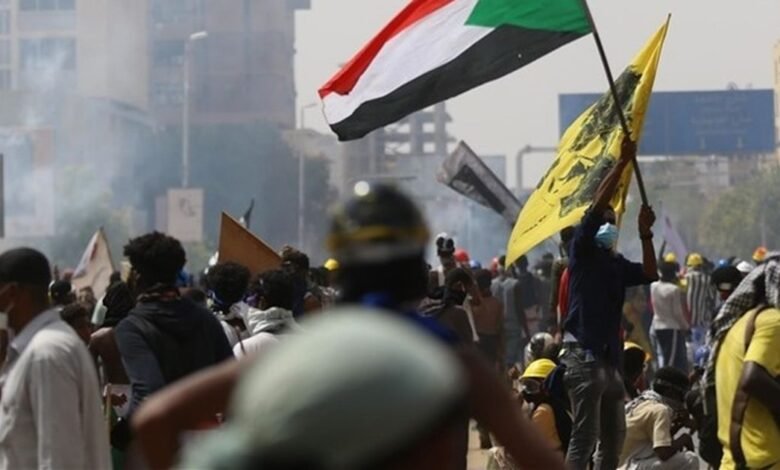
Sixty-two years have passed since the October 21, 1964 revolution, a pivotal moment in Sudan’s resistance to military rule. Today, the country is engulfed in a war that threatens its territorial integrity and social fabric. This paradox highlights a fundamental issue extending beyond the cycle of revolutions and coups: why has popular will repeatedly succeeded in stripping regimes of their legitimacy, yet failed to convert revolutionary legitimacy into an institutional framework capable of protecting political transitions?
The difficulty appears less a limitation of revolutionary action than a historical gap between the capacity to overthrow power and the ability to rebuild it according to rules that transcend individuals and power balances. In this context, Hannah Arendt’s distinction in her 1963 book “On Revolution” between liberation from oppression and the establishment of political freedom offers explanatory value. The political meaning of a revolution is not completed by displacing the existing government but by creating institutions that ensure continued public participation and prevent the political sphere from being appropriated again.
Structural Dualism and Military Power
The flaw was not merely the absence of popular will or constitutional texts, but the persistent divergence between authority deriving its legitimacy from revolutionary demands and centers of power that retained the ability to influence or paralyze political decisions. Max Weber’s concept of rational-legal legitimacy provides a lens for understanding this disorder; stable governance under this model relies on recognition of general rules, defined competencies, and institutions deriving authority from a legal system rather than personal status or the ability to enforce obedience.
Sudan’s experience revealed a dualism between the political legitimacy generated by popular transformations and actual control over instruments of force and economic resources. The transfer of power to civilians did not coincide with subjecting armed institutions and their economic influence networks to effective institutional civilian oversight. Consequently, some power centers could derail transitional paths while civilian institutions bore governing responsibilities without possessing all the tools to exercise them.
The Lesson of 2023
This dualism shows that revolutionary legitimacy does not automatically become institutional legitimacy simply by forming a civilian government or adopting a constitutional document. Nor does institution-building mean replacing popular will with abstract legal procedures. If institutional construction disconnects from the demands that granted the revolution its legitimacy, it can transform into a formal framework reproducing previous hegemonies. Reducing the Sudanese dilemma solely to the civil-military relationship obscures deeper imbalances in the state structure, management of social and regional diversity, and distribution of power and wealth between the center and peripheries.
The April 2023 war was not merely a confrontation between the Sudanese Armed Forces and the Rapid Support Forces; structurally, it revealed the destructive consequences of the armed forces remaining an independent source of power and economic influence amidst tangled internal and external interests. When instruments of force shift from institutions meant to protect the state to parties competing for control, conflict moves from determining who rules to threatening the very conditions making statehood possible.
After 62 years, the question is no longer about Sudanese capacity for revolution, which history has proven, but about converting popular will into an institutional system protecting it from appropriation, coup, and fragmentation. The deepest lesson is that revolution is not complete by toppling illegitimate power, but by establishing a state where institutions are inseparable from society and the armed forces do not derive independent political legitimacy from public will.