Intensification of Military Confrontation
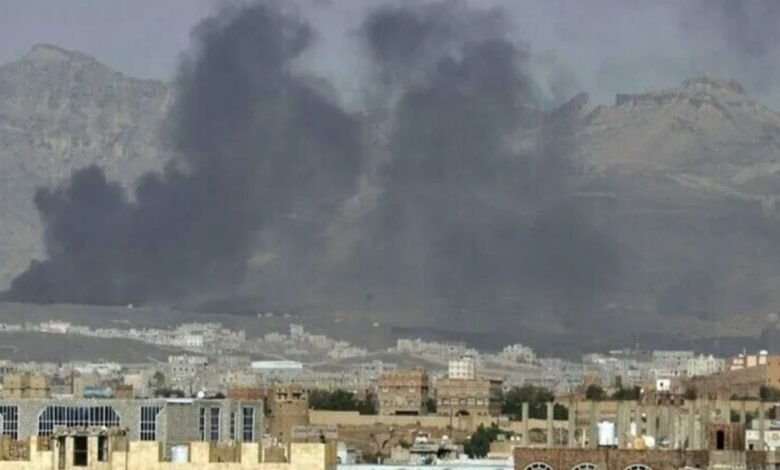
The war in Yemen has entered a more dangerous phase as military clashes between Saudi Arabia and the Houthi group, Ansar Allah, intensify. The scope of mutual attacks has widened to include airports, oil installations, and ports, while prospects for a political solution continue to recede. There are growing concerns that the conflict’s repercussions will extend to Gulf security, global energy supplies, and international trade through the Red Sea and the Bab al-Mandab Strait.
Washington Post reported that a recent bloody attack by Houthi militants on an airport in the Saudi capital, alongside strikes on state-owned oil company Aramco and the presidential palace of the Saudi-backed Yemeni government, has heightened risks in a war with no clear exit in sight. In response, Saudi Arabia has launched a military campaign in Yemen to reclaim territories held by what it describes as an Iran-backed militia.
Strategic Stalemate and Geopolitical Implications
According to two officials in the Riyadh-backed government, Saudi leadership views achieving victory on the battlefield as its only option. Recent battles represent a new chapter in a civil war that has been intermittent for over a decade. One Yemeni official, speaking on condition of anonymity due to the sensitivity of security issues, stated that it is clear the Houthis and their allies in Iran had prepared for war during years when peace was supposedly prevailing. He emphasized that this conflict would not be limited to Saudi Arabia and Yemen but would affect the entire world.
This escalating conflict has become the hottest front in a wider regional confrontation triggered by US-Israeli attacks on Iran in February, which prompted Tehran to launch attacks on Gulf states and Lebanese Hezbollah to strike Israel. With the US midterm elections approaching, high fuel costs have turned voters against President Donald Trump’s Republican Party. The White House has attempted to lower costs by lifting sanctions on Russian diesel exports, but these efforts have failed to impact opinion polls.
Diplomatic Failures and Global Impact
Trump, who has a close relationship with Saudi Crown Prince Mohammed bin Salman, has shown hesitation in military intervention. Last year, US airstrikes against the militants caused significant casualties but failed to end the conflict. Following the Riyadh airport attack, Trump suggested considering joining Saudi strikes, though his statements were inconsistent. He hinted that Saudi Arabia might accept Israeli assistance and potentially join the Abraham Accords, without providing strong evidence.
Regional officials and analysts view the war as a zero-sum game where both sides escalate attacks while negotiations remain off the table. A Yemeni official noted that no one is currently discussing negotiations. Diplomat Raed Karamli indicated that Riyadh believes Iran is encouraging Houthi escalation to strengthen its negotiating position against the US. The international community has failed to address field developments, allowing the Houthis to gain significant ground along the Red Sea coast and control the strategic Bab al-Mandab strait, through which approximately 20 percent of global trade passes.
Ahmad Naji, a senior researcher at the International Crisis Group, described the conflict as decisive for Yemen’s future and Gulf security. He noted that while intense airstrikes cause significant damage to the Houthis, coalition ground performance has been weaker than expected. Ali Al-Shahabi, a Saudi analyst, expressed frustration in Riyadh over the lack of US military assistance via aircraft, while acknowledging some appreciation for other forms of support.