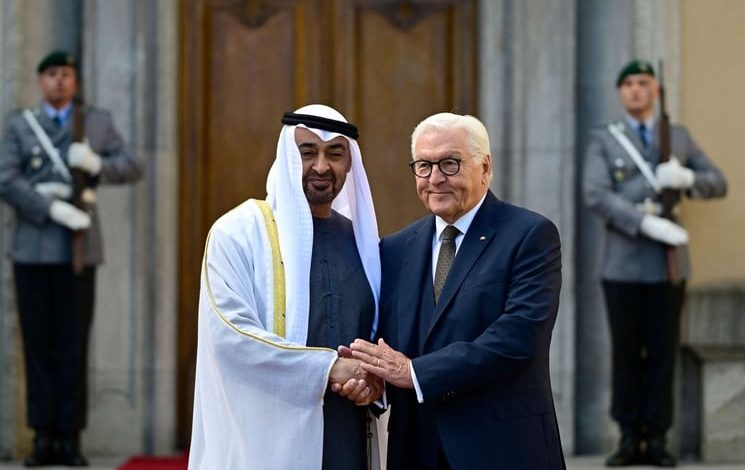
German President Frank-Walter Steinmeier welcomed his Emirati counterpart, Mohammed bin Zayed Al Nahyan, with full military honors in Berlin on Thursday. The ceremony marked the beginning of a state visit where Abu Dhabi is seeking to cement billions of euros in new agreements with Germany. This diplomatic push aims to broaden economic and security cooperation between the two nations, even as human rights organizations call for accountability regarding the UAE’s involvement in the ongoing war in Sudan.
Strategic Agreements and Defense Cooperation
According to reports from Die Welt, the two leaders held discussions following the reception. The day’s schedule includes meetings with Chancellor Friedrich Merz in the afternoon, where the signing of agreements is expected, followed by a state dinner hosted by the German President. Officials from the UAE Ministry of Foreign Affairs told Deutschlandfunk radio that up to 45 agreements could be signed during the visit, with a total value estimated in the billions. However, final details and exact figures have not yet been disclosed.
The German news agency reported that preparations involve establishing a German-UAE Investment Council and launching a strategic dialogue. Plans also outline deeper, organized collaboration in defense and arms supply. Additional areas of focus include digital cooperation concerning data centers, legal assistance in criminal matters, and enhanced efforts against organized and cybercrime. Anwar Gargash, the UAE President’s diplomatic advisor, highlighted joint capabilities to counter drones as a potential area of cooperation. These disclosures follow earlier reports from Table Briefings on August 30 regarding preparatory meetings between German defense industry representatives and Emirati envoys.
Sudan Conflict and Political Tensions
Parallel to the official ceremonies, the German “Endangered Peoples Association” urged Merz to explicitly demand an end to support for the Rapid Support Forces in Sudan. Human rights officer Sarah Reinke stated that hosting the UAE leadership undermines Germany’s efforts to protect civilians. The association accused the UAE of funding and arming the militia, calling on Berlin to pressure Abu Dhabi to ensure humanitarian aid access. A protest was planned outside the main train station in Washington Square.
The UAE denies supporting the Rapid Support Forces. Meanwhile, historian Roman Dietert criticized the juxtaposition of a state banquet with talks on arms sales, describing it as double standards. He called for freezing arms exports to parties fueling wars rather than expanding them. Prior to the visit, Armand Zorn of the Social Democratic Party warned that expanding Emirates airline’s operating rights could harm German jobs and companies, amid opposition from Lufthansa. The visit proceeded under strict security measures involving approximately 1,300 police officers and traffic closures across parts of Berlin.