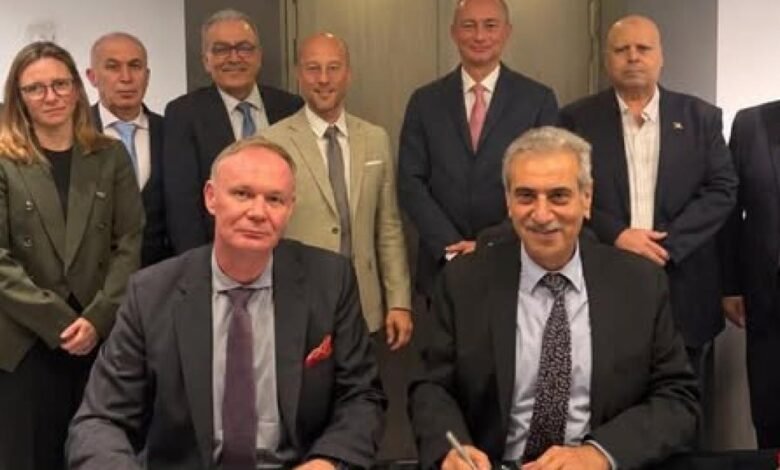
The Gaza National Committee for Administration and the German Agency for International Cooperation (GIZ) have signed a memorandum of understanding at the committee’s temporary headquarters in Cairo. The agreement aims to establish a framework for technical cooperation to support recovery and reconstruction efforts in the Gaza Strip. This marks another addition to the committee’s record of international frameworks and understandings, which have yet to be implemented on the ground.
Leadership Stance and Operational Priorities
Ali Shaa’th, head of the committee, stated that the implementation of cooperation areas will be led by the committee according to urgent priorities and needs in the Gaza Strip. He emphasized the importance of transforming these understandings into practical steps. However, no specific financial commitments or detailed project lists were announced. The published scope of the memorandum includes broad titles such as economic recovery, institutional development, municipal services, social protection, education, employment, planning, water, agriculture, and energy. The term “technical cooperation” generally implies expertise and consulting rather than material aid or concrete projects.
Historical Context and Unfulfilled Timelines
The committee officially began its work in January 2026 from Cairo, without assuming duties within the strip. In February, it relied on meetings of the Peace Council in Washington to secure funding. By June, it presented the European Union with a plan for the first hundred days of emergency relief to restore health, education, water, and municipal services. On July 31, a roadmap was announced stating that timelines and implementation mechanisms would be prepared within 14 days of approval by all parties, with execution contingent upon the committee’s entry into the sector. Despite declaring full readiness to assume management duties on the same day, nine months later, the urgent plan remains unimplemented inside Gaza. Entry is still conditional on incomplete arrangements, and funding remains pending.
Criticism and Public Reaction
Residents argue that the approach has not changed, only the names and locations. They claim that each new agreement provides international bodies with material to claim they are coordinating and working, while granting delay diplomatic cover. Nationalist leader Zu al-Fiqar Suwairjo criticized the move on Facebook, describing the memorandum as “all talk and circumlocution” with no urgent plan or practical steps. He warned against misunderstanding the agreement as an intention to start, noting that it lacks work papers, mechanisms, and dates.
Other citizens expressed frustration. Bakr Al-Sinakri stated, “They have killed us with signatures and agreements; enter Gaza and free us.” Huda Jabir called it “words on paper,” accusing the committee of being merely for signing. Engineer Shadi Asiri criticized the process as theatrical, questioning the salaries of members earning tens of thousands of dollars while achieving nothing on the ground. Ibrahim Sajidi asked why they should care about dollar salaries, while Anas Al-Qudwa questioned how much salary each member receives on the eve of Gaza’s bloodshed. Muhammad Imad noted that while the committee excels at signing papers, there is zero achievement on the ground. Hassan Adel concluded by asking where the committee is while people suffer in Gaza, urging them to feel shame.